Not every church can achieve optimal performance with the same audio system configuration. Each parish differs in terms of building size, congregation capacity, architectural design, and operational requirements. Therefore, chooosing the right solution from the beginning is essential to maximizing investment efficiency, ensuring high-quality sound reproduction, and simplifying long-term system operation and maintenance. See more at this articles
What factors are considered when designing a church sound system?
.jpg)
Before selecting equipment, it is important to evaluate the overall characteristics of the building:
- Church floor area.
- Building length and ceiling height.
- Number of attendees.
- Architecture and reverberation level.
- Choir area requirements.
- Special liturgical event requirements.
These are the key factors that directly influence the design of a suitable church sound system.
Church sound solutions for different parish sizes
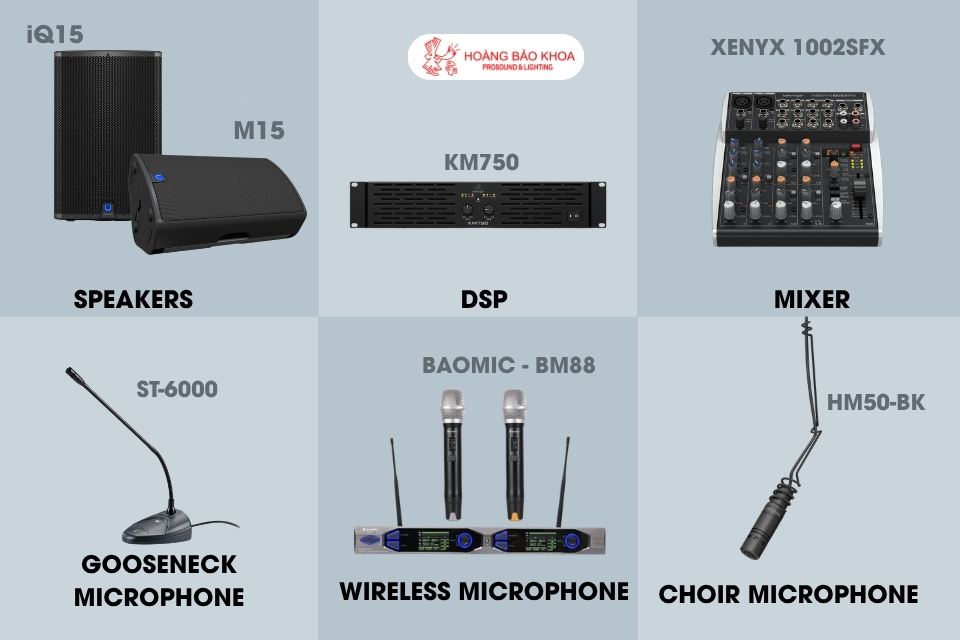
Suggested equipment distributed by Hoang Bao Khoa - Actual system configurations depend on the scale and specific characteristics of each church.
Church sound system for small parishes
Chapels and small parishes generally accommodate fewer than 200 people.
Building characteristics
- Compact space.
- Short distance from the sanctuary to the rear seating area.
- Limited need for audio zoning.
Suggested configuration
- Installation loudspeakers.
- Small analog or digital mixer.
- Gooseneck Microphone for the lectern.
- Wireless microphone for the celebrant.
- Basic DSP for feedback suppression and EQ adjustment.
This is a cost-effective solution that still meets the requirements of regular weekly services.
Church sound system for medium-sized parishes
These churches typically accommodate between 200 and 700 attendees.
Building characteristics
- Longer interior space.
- Dedicated choir area.
- Requirement for even sound coverage.
Suggested configuration
- Column speakers or dedicated installation loudspeakers, with delay speakers if required.
- Lectern microphone.
- Wireless microphone for the celebrant.
- Choir Microphones.
- Digital mixer.
- Professional DSP signal processing.
This is currently the most common church size found in many parishes nationwide.
Church sound system for large parishes and cathedrals
Churches with capacities exceeding 700 attendees generally require professionally engineered systems.
Building characteristics
- Large floor area.
- High ceilings.
- Significant reverberation.
- Multiple listening zones requiring coverage.
Suggested configuration
- Column speaker systems or installed line array systems.
- Multi-zone delay speakers.
- Celebrant and lectern microphones.
- Choir microphones.
- Multi-channel digital mixer.
- Advanced DSP signal processing.
- Centralized monitoring and control system.
At this scale, detailed site surveys and system design play a critical role in overall performance.
Hoang Bao Khoa provides church sound consultation for every parish size
Hoang Bao Khoa supplies professional church sound solutions for a wide range of projects across Vietnam, from small chapels to large churches and cathedrals.
- On-site project surveys.
- System recommendations tailored to budget requirements.
- Design based on parish size and building characteristics.
- Supply of genuine equipment.
- Installation, tuning, and operator training.
- Full CO, CQ documentation and official warranty support.
In addition to church sound solutions, Hoang Bao Khoa also provides conference hall audio systems, stage sound systems, audio consulting, lighting consulting, and lighting solutions for schools, businesses, and government organizations nationwide.
Frequently asked questions about church sound systems
.jpg)
What does a basic church sound system include?
A typical system includes loudspeakers, microphones, a mixer, DSP signal processing, amplifiers, and connection accessories.
What factors determine the right church loudspeaker system?
Higher power does not automatically result in better performance. A properly designed loudspeaker system delivers clear speech and minimizes dead zones. Loudspeaker selection should be based on:
- Building size.
- Coverage distance.
- Architectural characteristics.
- Level of reverberation.
Which microphones are suitable for churches?
A complete church sound system usually combines several microphone types:
- Gooseneck microphones for lecterns.
- Wireless microphones for the celebrant.
- Wired microphones for choirs.
- Specialized microphones for major liturgical events when required.
Choosing the right equipment helps improve speech intelligibility and reduce feedback issues.
{SanPham}