Many parishes invest in sound systems to address immediate needs such as replacing outdated loudspeakers, adding microphones, or improving sermon clarity. However, after several years of use, as the number of congregants increases or pastoral activities expand, the system may begin to reveal its limitations.
At that point, upgrading is no longer as simple as adding a few more devices. In some cases, the entire system configuration may need to be redesigned or modified from the original investment.
A System That Fits Today May Not Be Suitable After Several Years
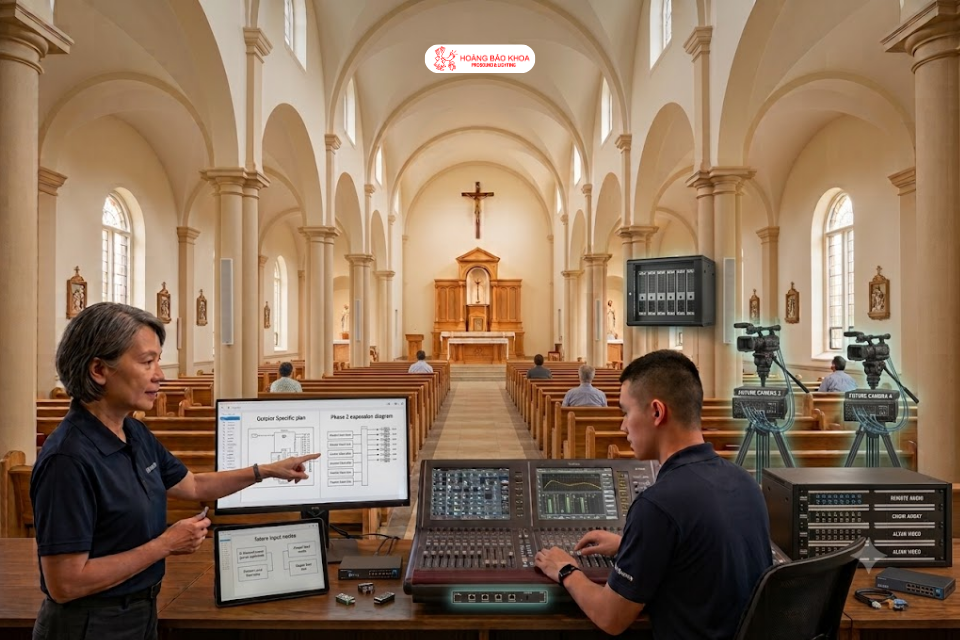
The usage requirements of a church can always change over time. An audio system that works well at the present moment may no longer be suitable when the scale of activities or usage demands increase in the future.
Some common changes include:
- The choir has more members
- Additional activity areas or chapels are added
- More Masses are organized during major religious events
- Live streaming Masses on online platforms
- Connecting additional recording or video equipment
If the original sound system is not designed with future expansion in mind, every new requirement may require additional equipment investment or changes to the installation layout. This not only increases costs but can also affect the overall operation of the system.
Forward-Thinking Design Helps Save Long-Term Costs
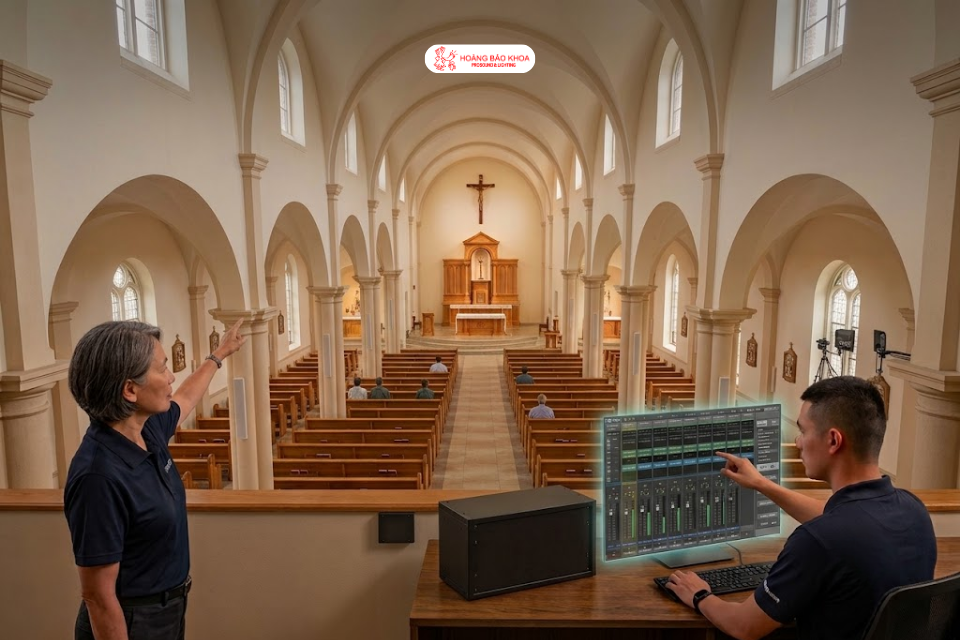
A well-designed sound system is not only built to meet current needs but also creates a flexible foundation for future upgrades and expansion.
This can include:
- Preparing enough input and output channels on the mixer for future equipment additions
- Planning signal cable routes scientifically for easier expansion
- Selecting a scalable configuration without replacing the entire system
- Arranging equipment racks and power systems properly for future upgrades
The initial investment cost may not be significantly different, but proper preparation from the beginning can help the church save considerably when expansion or changes in usage requirements occur in the following years.
During the consultation process, Hoang Bao Khoa always discusses long-term usage plans with the church instead of focusing only on immediate needs. As a result, the proposed solution is not only suitable for the current condition but also capable of adapting when requirements change.
Conclusion
A sound system is not only designed to serve today's needs but also needs to accompany the church for many years ahead. Therefore, when investing, the important factor is not choosing more equipment but building a solution that can develop along with the actual needs of the church.
A proper decision from the design stage will help reduce future upgrade costs and ensure the system continues to effectively support both liturgical and pastoral activities in the years to come.