During the operation of an auditorium sound system, audio feedback is one of the most common and frustrating issues. It not only negatively impacts the listening experience but also reduces the professionalism of the event.
Understanding the causes and solutions for feedback helps optimize overall sound performance while ensuring the system operates stably in all situations.
Feedback occurs when sound from speakers is picked up again by Microphones and repeatedly amplified. Common causes include:
- Microphones pointing directly toward speakers
- Distance between microphones and speakers is too close
- Microphone or mixer gain is set too high
- Highly reflective acoustic environments
- Improper system tuning
These issues are common when systems are not properly designed and planned from the beginning.
1. Adjust microphone and Speaker Placement
Always position Microphones behind speakers and avoid pointing them directly at sound sources. Proper distance helps reduce feedback risk.
2. Optimize Gain Structure
Avoid setting gain too high. Instead, balance gain, volume, and EQ to achieve the desired loudness without causing feedback.
3. Use EQ to Cut Problem Frequencies
Each space has specific frequencies prone to feedback. Using EQ to reduce these frequencies is a key technique in Professional Audio tuning.
4. Use Signal Processing (DSP)
DSP can automatically detect and suppress feedback frequencies, helping the system operate more stably. This is widely used in professional systems.
5. Control Acoustic Environment
Reflective surfaces such as glass and hard walls increase the risk of feedback. Adding acoustic treatment materials significantly improves sound quality.
Optimizing Auditorium Audio – Beyond Feedback Control
In addition to feedback control, optimizing an audio system includes:
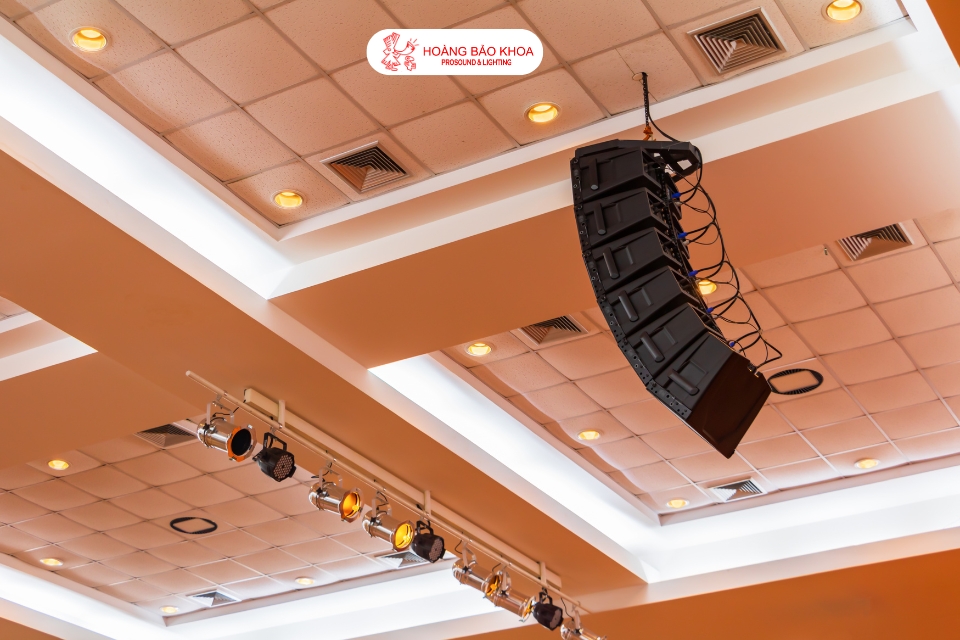
- Proper speaker placement for even coverage
- Selecting suitable microphones for specific applications
- Calibrating mixers and signal processing systems
- Coordinating with lighting systems for events
A well-optimized system delivers clear, accurate, and professional sound for all types of events.
Role of a Professional Installation Provider
Handling feedback and optimizing audio systems requires expertise and experience. A professional provider can:
- Design systems that minimize feedback risks
- Calibrate equipment according to technical standards
- Optimize system performance based on space
- Provide ongoing technical support
Hoàng Bảo Khoa delivers comprehensive audio and lighting solutions, helping customers deploy stable and efficient auditorium audio systems.
Auditorium Audio Solutions at hoàng bảo khoa
- Genuine equipment with full CO, CQ documentation
- Project-based consultation and system design
- Professional installation and calibration
- 1-to-1 replacement within 48 hours for defective products
- Free nationwide delivery
With practical experience, Hoàng Bảo Khoa helps optimize auditorium audio systems, minimize feedback, and ensure consistent sound quality.
Frequently Asked Questions about Audio Feedback
Why do microphones easily cause feedback?
Because sound from speakers is picked up again by the Microphone and repeatedly amplified, often due to close distance or excessive gain.
Can I fix audio feedback by myself?
Basic adjustments like repositioning microphones and reducing gain can help, but full optimization requires expertise and professional equipment.
Is DSP necessary in an auditorium audio system?
Yes. DSP helps process signals, reduce feedback, and optimize sound quality, especially in professional systems.