One of the most frustrating issues for streamers is audio quality changing once they go live. During sound checks with studio headphones, the audio may sound loud, clear, and well balanced. However, after starting a livestream on platforms such as TikTok Live or Facebook Live, viewers may report that the audio is too quiet, choppy, or muffled. In most cases, this is not caused by faulty hardware. Instead, it results from the platforms' automatic audio compression and AI-based noise reduction algorithms, which can negatively affect the incoming audio signal if the system is not configured properly.
Why TikTok and Facebook Automatically Reduce Livestream Audio Volume
To optimize bandwidth for millions of concurrent viewers, platforms such as Facebook and TikTok employ automatic audio processing technologies, including Loudness Normalization and AI-powered noise reduction algorithms.
If the audio signal from your soundcard is excessively loud and continuously reaches peak levels, the platform's protection algorithm is automatically activated to reduce the overall livestream volume, preventing speaker distortion for viewers. On the other hand, if your livestream contains excessive background noise, such as fan noise or electrical hum, while your voice is too quiet, the AI noise suppression system may mistakenly classify your speech as environmental noise. As a result, it may remove important vocal frequencies or cause choppy, muffled audio during the broadcast.
How Hoang Bao Khoa Hardware Helps Maintain Stable Livestream Audio
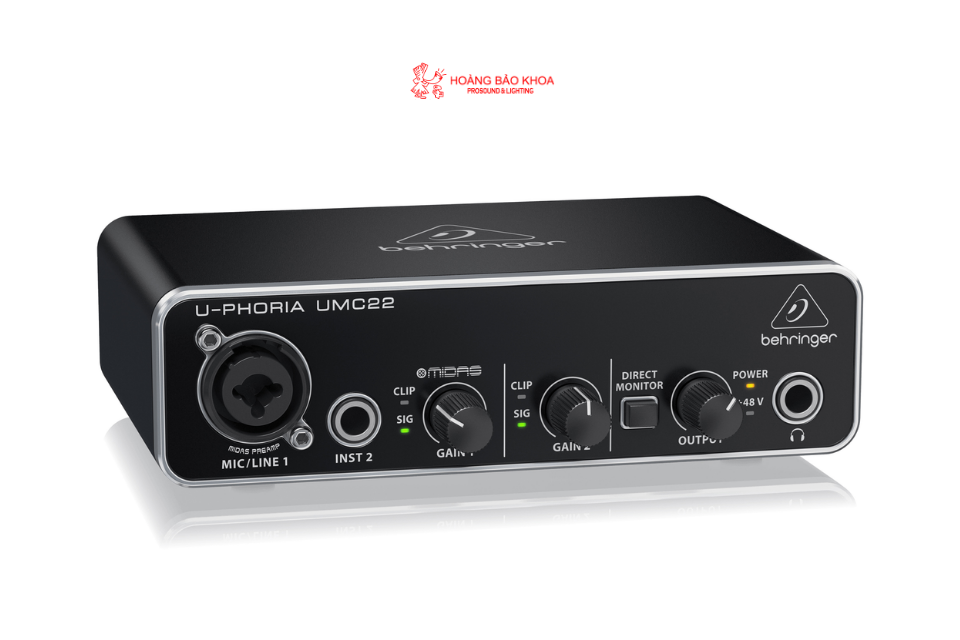
To meet the strict audio requirements of modern social media platforms, your livestream setup should deliver a clean, consistent, and properly balanced signal. Hoang Bao Khoa offers a complete ecosystem of Professional Audio equipment to help achieve this goal.
- Professional Behringer Microphone preamps: Genuine Behringer audio interfaces such as the UM2 and UMC22 feature high-quality microphone preamps that amplify Microphone signals smoothly and consistently. This ensures stable signal levels that social media algorithms recognize as clean audio, helping preserve the original sound quality during livestreams.
- High-quality shielded audio cables: Professional microphone cables such as the Behringer GMC-300CM and premium Bespeco cables from Italy use 99.99% pure copper conductors and effective shielding to minimize signal loss and electromagnetic interference, delivering full-bodied and reliable audio throughout the broadcast.
- Follow the recommended recording level: When configuring OBS Studio or TikTok Live Studio, monitor the Volume Mixer carefully. Adjust the gain on your audio interface so that your loudest voice peaks remain in the dark green area and occasionally touch the yellow zone (approximately -6 dB to -3 dB). Avoid reaching the red zone (0 dB), which can cause clipping and trigger automatic loudness reduction.
Understanding how social media audio algorithms work and maintaining a clean, properly balanced audio signal are essential for delivering a professional livestream experience. Contact hoang bao khoa today for expert advice on configuring your audio system for optimal streaming performance.