Many parishes begin their audio projects by purchasing loudspeakers, microphones, or mixers based on recommendations from acquaintances or online research. This is a common approach, but it is also one of the main reasons why many installed systems fail to meet expectations after completion.
Equipment Is Not the Starting Point of a Project
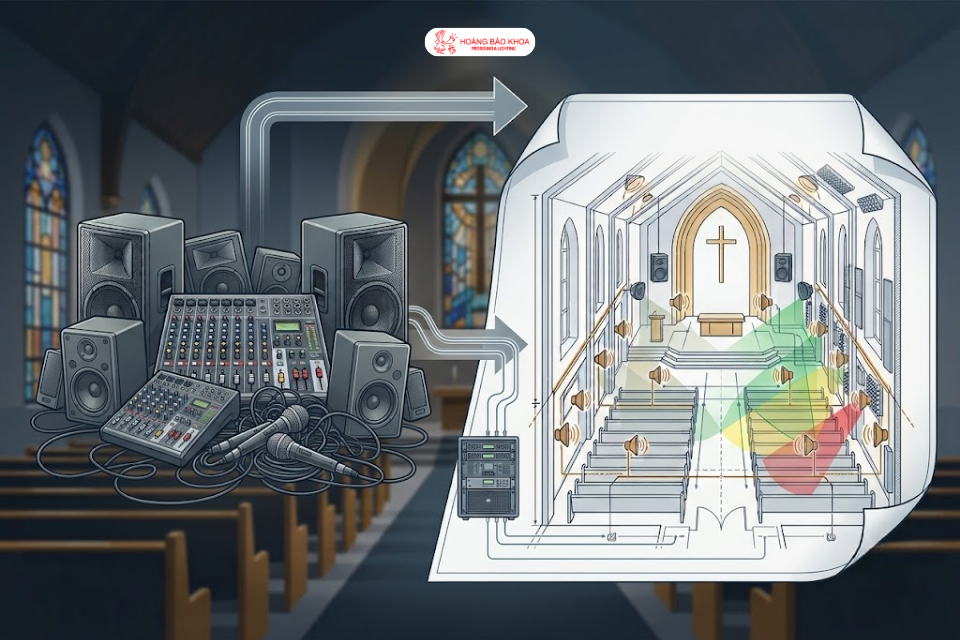
When building a church, no one begins by choosing doors or roofing before having an architectural blueprint. An audio system follows the same principle.
Each device is only one component of a larger system. If equipment is selected without proper site survey and without clearly defining operational needs, it is very easy to end up with devices that are technically suitable but not practically compatible with the project.
In real-world implementation, technical teams often encounter situations such as:
- High-power speakers that do not match the acoustic coverage of the space
- A mixer lacking sufficient input channels when the choir expands or new devices are added
- Microphones selected based on online reviews but not suitable for actual usage requirements
- Equipment purchased at different times, making system synchronization and optimization difficult
These issues are not caused by poor equipment quality, but rather by the absence of a well-structured system design from the beginning.
Design First to Ensure Proper Investment from the Start
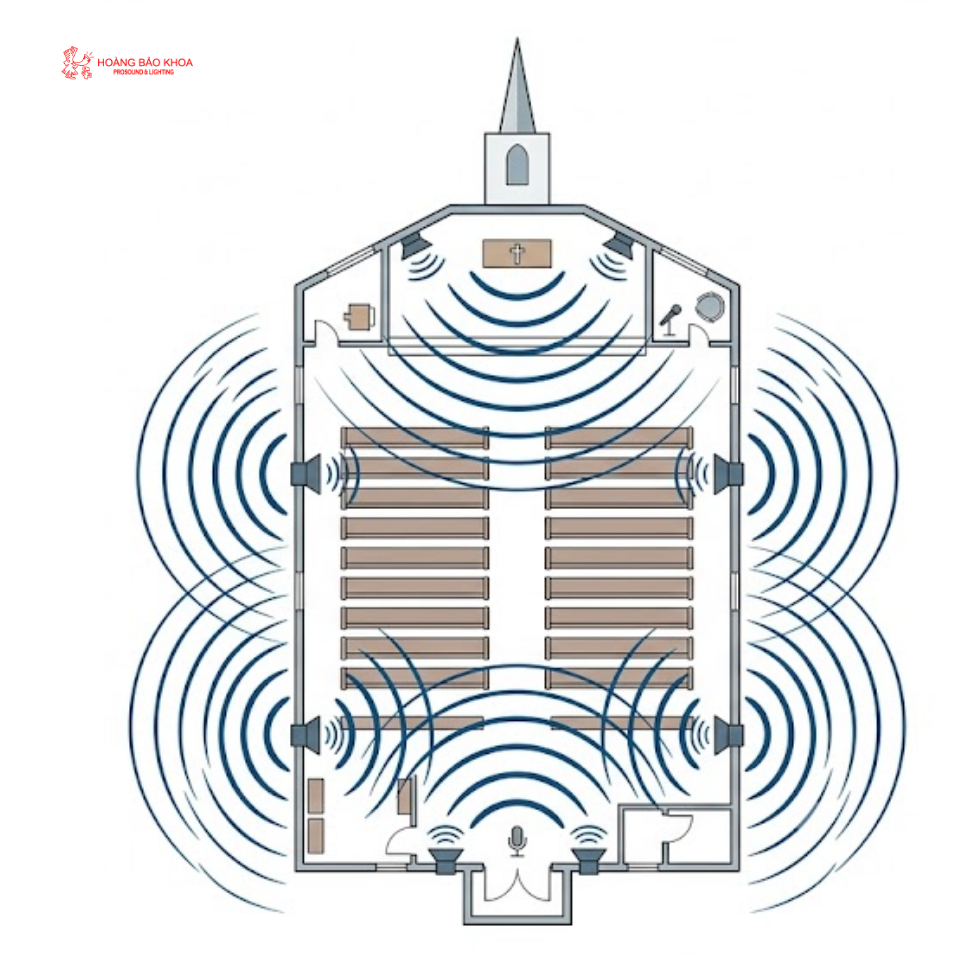
A well-structured design plan helps the parish clearly answer important questions before making any equipment investment decisions:
- How many people will the system serve?
- Which areas require higher speech clarity priority?
- Is there a need for future expansion or live-streaming integration?
- Which equipment is essential at the current stage, and which can be added later?
Once these factors are clearly defined, equipment selection becomes more accurate and efficient. Instead of choosing based on preference or brand reputation, the parish can optimize its budget and avoid unnecessary system changes in the future.
This is also the approach applied by Hoang Bao Khoa in church audio system projects. The technical team always begins with on-site surveys, direct discussions with the parish, and an assessment of long-term operational needs. From there, the solution is designed not only for current requirements but also for future scalability.
Conclusion
An effective audio system does not start with equipment selection, but with a clear understanding of the space and its intended use.
When design comes first, each device plays a clearly defined role within the overall system. This approach helps optimize investment costs, ensure stable sound quality, and support long-term reliable operation.