Many people assume that a small chapel does not require a professionally designed sound system. In practice, however, many chapels still experience issues such as poor speech intelligibility, feedback, and uneven sound coverage. Based on Hoang Bao Khoa’s installation experience, a properly designed audio system can significantly enhance the quality of worship services, even in smaller spaces.
A Small Space Does Not Automatically Mean Better Sound
This is one of the most common misconceptions when planning a sound system for a chapel.
Many people assume that a pair of speakers and a few Microphones are enough to meet the requirements. However, sound quality is not determined by the size of the building, but by how the system is designed and how the equipment is selected.
Even in chapels serving only a few dozen to a few hundred worshippers, issues such as reverberation, Microphone feedback, and poor speech intelligibility can still occur if the sound system is not properly planned.
What Is the Most Important Goal of a Chapel Sound System?
Unlike performance venues or multipurpose halls, the primary objective of a chapel sound system is to ensure that worshippers can clearly understand every part of the liturgy.
An effective system should provide:
- High speech intelligibility
- Comfortable listening levels
- Even sound coverage throughout the space
- Minimal feedback issues
- Easy operation
This is especially important for chapels that regularly host Masses, prayer services, and pastoral activities.
Common Sound Issues Found in Small Chapels
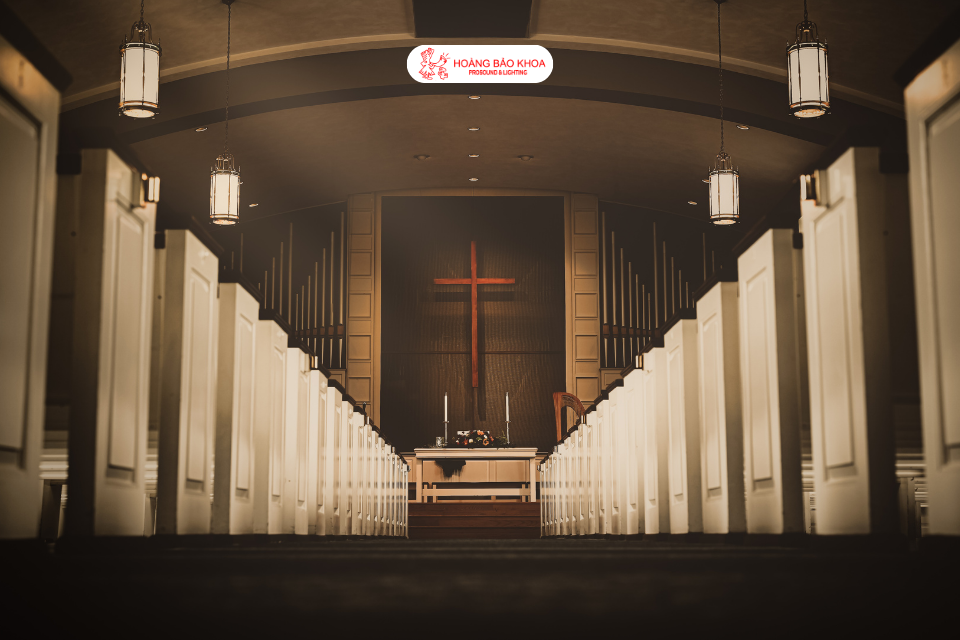
Based on extensive field surveys, many chapels experience similar audio challenges.
Sound Levels That Are Too Loud for the Space
Some systems use speakers with power ratings far beyond the actual requirements of the chapel.
As a result, people seated near the speakers may find the sound harsh or uncomfortable, while operators constantly adjust volume levels throughout services.
Because microphones and speakers are often located relatively close to each other, the risk of audio feedback is higher.
If the microphone type or installation position is not appropriate, feedback may occur frequently during use.
Unnatural Sound Reproduction
Many installations focus primarily on power specifications or budget considerations while overlooking sound characteristics.
This can make voices sound unnatural and negatively affect the delivery of liturgical messages.
How Should Speakers Be Chosen for a Chapel?
For chapel applications, speaker selection should focus on speech reproduction and coverage performance rather than power output alone.
Important factors include:
- Excellent speech clarity
- Coverage angles suitable for the room
- Dimensions that complement the architecture
- Reliable long-term operation
Depending on the size of the chapel, installation speakers or column speaker systems may deliver better results than conventional stage speakers.
Which Microphones Are Suitable for a Chapel?
The microphone is the first device in the audio signal chain and has a direct impact on speech quality.
A typical chapel sound system usually includes:
Priority should be given to Microphones that provide clear, natural speech reproduction while minimizing feedback.
Gooseneck microphones are a popular choice thanks to their elegant appearance and stable fixed installation.
Choir Microphones
If the chapel has a regularly serving choir, dedicated microphones designed for vocal performance should be considered for better sound quality and easier system adjustment.
Is High-End Equipment Necessary for a Chapel?
Not every chapel requires the most expensive audio equipment available.
The key is selecting the right equipment for the actual needs of the facility.
In many situations, a properly designed system within a reasonable budget will deliver better results than investing in numerous high-end devices without system integration.
This is also the approach commonly applied when designing sound solutions for small and medium-sized chapels and churches.
The Importance of On-Site Evaluation
Every chapel has unique architectural characteristics and usage requirements.
Factors such as:
- Floor area
- Ceiling height
- Building materials
- Number of attendees
all influence the final system design.
For this reason, an on-site assessment is always an important step to ensure the proposed solution matches the actual conditions of the facility.
Conclusion
Even a small chapel requires a properly designed sound system to provide clear speech and a comfortable listening experience for the congregation. The goal is not to install as much equipment as possible, but to choose a solution that matches the building size and real-world requirements.
When planned correctly from the beginning, a sound system not only enhances liturgical activities but also helps reduce future upgrade and maintenance costs.