After each Mass, many parishes have the habit of turning off all audio equipment immediately. On the other hand, some keep the system running continuously for several hours or even the entire day, believing that frequent power cycling may reduce equipment lifespan. So, what is the proper way to operate a church sound system?
Not Every Device Should Be Turned Off at the Same Time
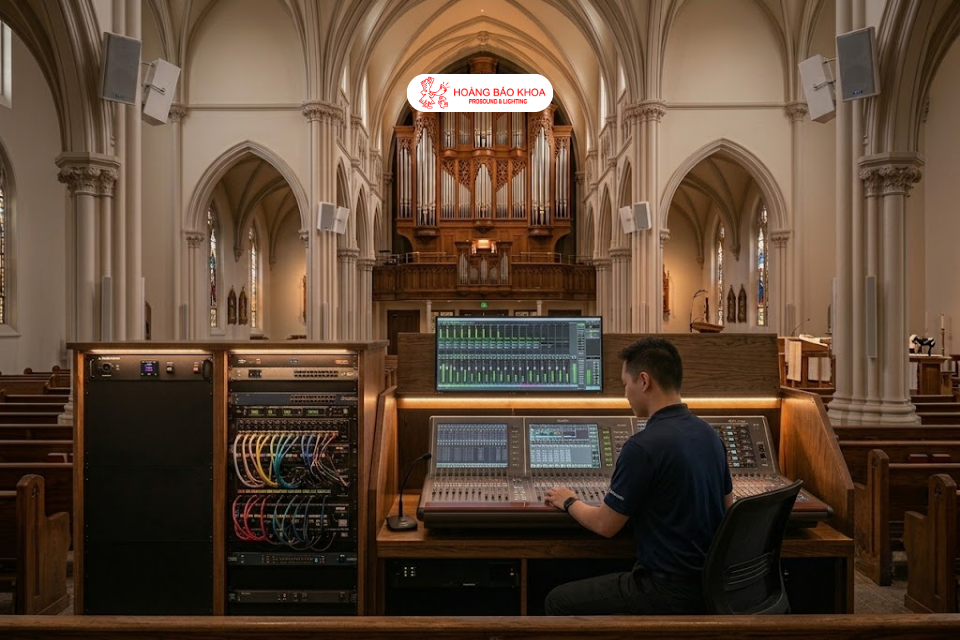
One of the reasons why an audio system deteriorates faster is not only related to usage frequency but also to improper operating procedures.
If the power amplifier or active speakers are turned off before the mixer and signal processing devices stop operating, the system may generate a loud “pop” sound. Repeating this situation over time can affect the speakers and create an unpleasant experience for people inside the Church.
Similarly, when starting up an audio system, signal source devices and processors should be fully stabilized before sending signals to the speakers.
Following the correct power-on and power-off sequence not only helps the system operate more safely but also contributes to extending the lifespan of all equipment.
Proper Operation Helps Reduce Maintenance Costs
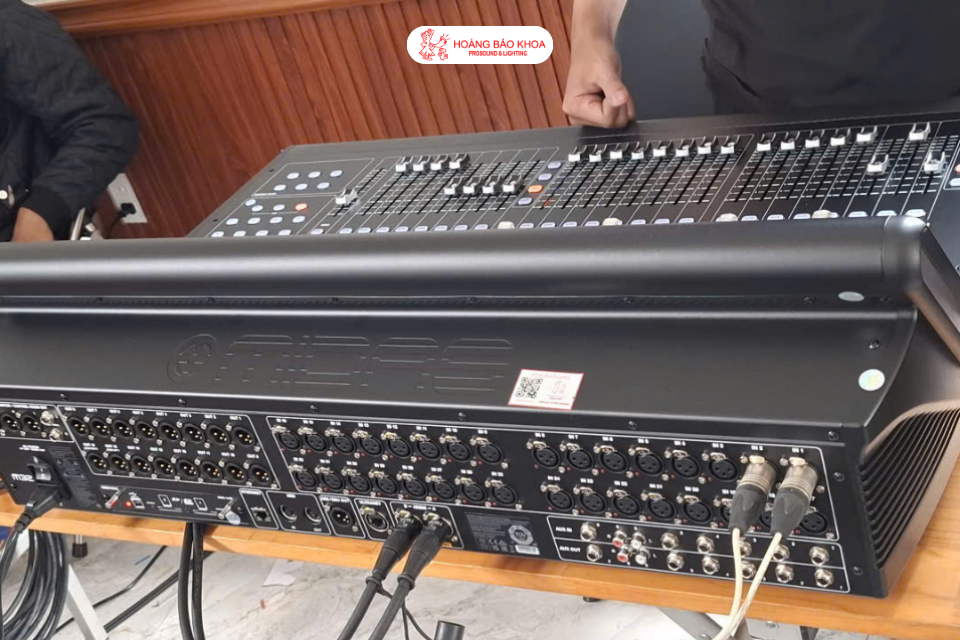
Many churches today focus heavily on selecting high-quality equipment but have not paid enough attention to building a consistent operating procedure. This can lead to different operators using the system in different ways, increasing the risk of errors during operation.
For projects using Sennheiser Microphones for the choir, Sennheiser wireless Microphone systems combined with Neumann KMS capsules for the priest, Bizcom gooseneck microphones at the Word of God lectern, along with TANNOY or FBT speaker systems, proper operation helps maintain stable performance and minimize unexpected issues during use.
Besides providing audio equipment, Hoàng Bảo Khoa also focuses on guiding users through operation procedures and handing over the complete system after installation. This important step helps users understand how to operate the equipment effectively, especially in Churches where multiple people are responsible for managing the sound system.
Conclusion
A reliable Church audio system does not only depend on choosing quality equipment but also on how the system is operated every day.
Building the habit of turning equipment on and off in the correct sequence helps prevent technical issues, reduce maintenance costs, and maintain stable sound quality throughout every Mass and worship service.