When building a new church, the sound system is often treated as a final-stage installation. However, based on Hoang Bao Khoa’s experience, the most effective church audio systems are typically those that are considered early in the project, during the architectural design phase. This approach allows the audio system to be properly integrated with the building’s acoustics, ensuring optimal speech intelligibility and consistent coverage throughout the worship space.
Audio Should Not Be Left Until the Final Stage
A common situation in many construction projects is that the sound system is only considered after the main building work has already been completed.
This can create several challenges, including:
- Lack of suitable speaker installation locations
- Difficult signal cable routing
- Limited system expansion capability
- Increased installation and modification costs
For large church projects, planning the audio system from the beginning helps optimize both performance and investment costs.
Step 1: Evaluate the Building Architecture
No two churches are exactly alike.
The following factors should be carefully considered:
- Building length and width
- Ceiling height
- Construction materials
- Congregation capacity
- Choir area
- Sanctuary area
These are important data points for determining the appropriate speaker type, quantity, and sound coverage strategy.
Step 2: Define the Usage Requirements
Not every church uses its sound system exclusively for worship services.
Many parishes also host:
- Sacred music programs
- Youth ministry activities
- Pastoral seminars
- Community events
These requirements directly influence equipment selection and system configuration.
Step 3: Prioritize Speech Intelligibility
This is the most important principle in church sound system design.
The goal is not simply to achieve high volume levels, but to ensure that the congregation can clearly hear every reading, announcement, and sermon.
Therefore, speaker selection should focus on:
- Consistent sound coverage
- High speech intelligibility
- Effective control of sound reflections
This is one reason why many church projects utilize dedicated installation loudspeakers instead of conventional live performance speakers.
Step 4: Select the Right Equipment for Each Area
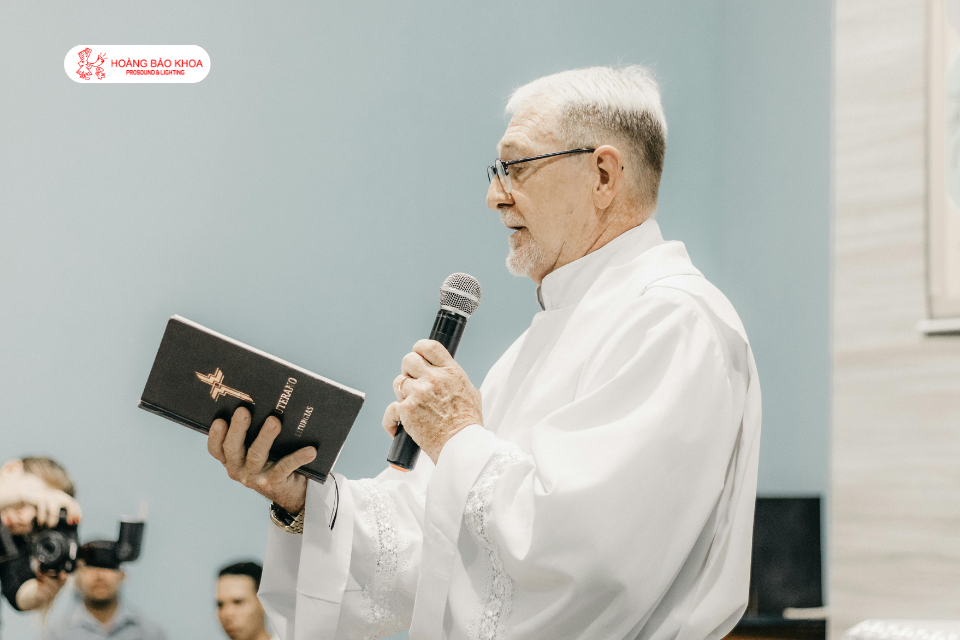
A church sound system typically includes the following areas:
Sermon Area
High-quality wireless Microphones are recommended to provide flexibility and excellent speech clarity.
Choir Area
Wired microphones are preferred for their stability and natural vocal reproduction.
Lectern Area
Gooseneck Microphones are commonly used to maintain a clean appearance and provide consistent voice pickup.
Speaker System
Speaker selection should be based on the building architecture rather than power ratings alone.
Step 5: Plan for Future Expansion
A newly built church is expected to serve its congregation for many decades.
For this reason, the audio system should be designed with the capability to:
- Expand sound coverage areas
- Add new equipment
- Upgrade technology
- Integrate video recording and livestreaming systems
This approach can significantly reduce future upgrade costs.
The Role of Professional Consultation During the Design Phase
One of the greatest advantages of working with an experienced consultant is the ability to identify potential issues early in the project.
During church audio planning projects, Professional Audio consultants often work closely with architects and parish building committees to develop appropriate solutions from the beginning, helping optimize investment efficiency while minimizing costly changes during installation.
Conclusion
An effective church sound system does not begin with choosing speakers or microphones. It begins with understanding the building architecture and the actual needs of the congregation.
Early planning helps churches build an integrated audio system that delivers clear speech, easy operation, long-term reliability, and excellent support for worship services for many years to come.