Many parishes spend significant time selecting loudspeakers, microphones, and mixers with the goal of achieving a high-quality sound system. However, in reality, some churches using the same models of equipment can deliver completely different listening experiences. What creates this difference?
Identical Equipment Does Not Mean Identical Results
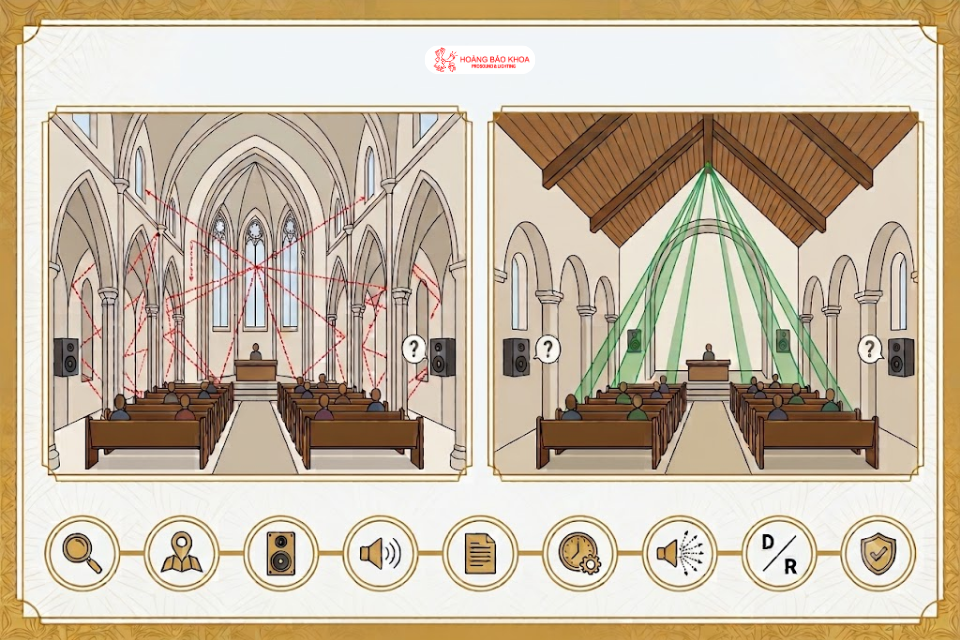
Equipment is only one part of an audio system. The final performance depends heavily on how the entire system is designed, installed, and tuned for each specific project.
Every church has its own unique characteristics such as architecture, ceiling height, construction materials, seating capacity, and liturgical arrangement. These factors directly influence how sound propagates within the space.
For example, the same loudspeaker model installed in two different churches can perform very differently depending on coverage angle, mounting height, and spacing between sound sources. Simply copying a setup from one project to another rarely delivers consistent results.
Similarly, Microphone selection cannot rely solely on brand or price. Microphones for the presider, the ambo, and the choir each have different requirements. When each position is properly matched with the right solution, the system operates more harmoniously and reduces operational issues significantly.
The Value of a Project Lies in Design and Implementation
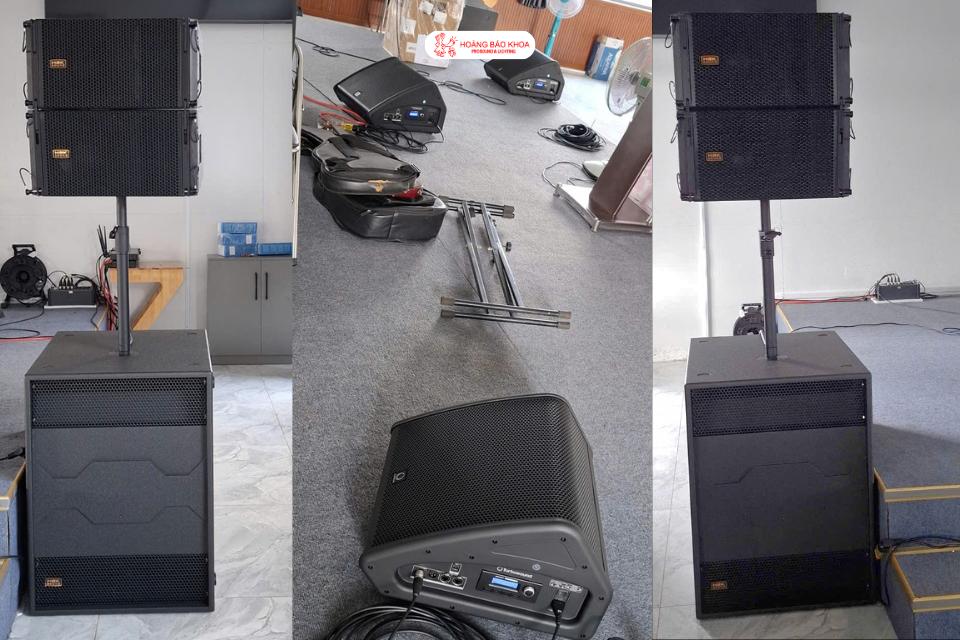
In many cases, the difference is not in additional equipment investment but in how the system is designed from the beginning.
A proper solution should answer key questions such as:
- Where should loudspeakers be placed so every area of the congregation can hear clearly
- Which audio sources should be prioritized during each part of the liturgy
- Can the system be expanded when parish needs change in the future
- Will maintenance and operation remain convenient over time
These factors are not reflected in a quotation, but they determine long-term system performance.
This is also why Hoang Bao Khoa always begins each project with a site survey and detailed consultation with the parish. Instead of applying a standard configuration to all churches, the technical team proposes tailored solutions for each space, optimizing investment efficiency and ensuring stable long-term operation.
Conclusion
A high-quality audio system is not defined by expensive or well-known equipment, but by how those components are integrated into a complete solution.
When the system is properly designed according to architectural conditions and real usage needs, it delivers maximum performance, ensures clear sound for the congregation, and minimizes future operational costs.