DI boxes are essential devices in live sound, studio, and professional performance systems. However, not everyone fully understands the differences between Active DI and Passive DI when selecting the right solution for their setup. Each type operates differently and is designed for specific applications, directly affecting signal quality and real-world system performance.
What Is the Difference Between Active DI and Passive DI?
The biggest difference between Active DI and Passive DI lies in how they process audio signals.
Active DI
Active DI uses electronic circuitry to amplify and process the signal before sending it to the mixer.
The device requires power from a battery, adapter, or phantom power.
Some key characteristics include:
- Stronger and more stable output signal
- Suitable for instruments with weak output levels
- Better preservation of high-frequency details
- More flexible signal processing capabilities
- Ideal for acoustic guitars, keyboards, or passive pickups
Passive DI
Passive DI operates through a transformer and does not require external power.
Common characteristics include:
- Simple and stable design
- Excellent noise rejection in stage environments
- Reliable operation with minimal dependence on power sources
- Suitable for devices with strong output signals
- Commonly used for active keyboards, playback systems, or amplifier outputs
Choosing the correct type of DI Box helps the system achieve optimal performance instead of simply connecting signals in a conventional way.
When Should You Choose an Active DI or Passive DI?
There is no DI Box that is “perfect” for every situation.
The right choice depends on the signal source and the actual operating environment.
You should choose an Active DI when:
- The instrument has a weak output signal
- High-frequency detail preservation is important
- Using an acoustic guitar or passive bass
- A clean signal is needed over long cable runs
- The system requires high signal sensitivity
You should choose a Passive DI when:
- The output device has a strong signal level
- Using playback systems or active keyboards
- The stage environment contains many electrical devices
- Stability and durability are prioritized
- Reducing dependence on external power is important
Understanding the characteristics of each type helps reduce noise, minimize signal loss, and maintain a more stable signal before reaching the mixer.
Why Are Klark Teknik DI Boxes Chosen by Many Audio Engineers?
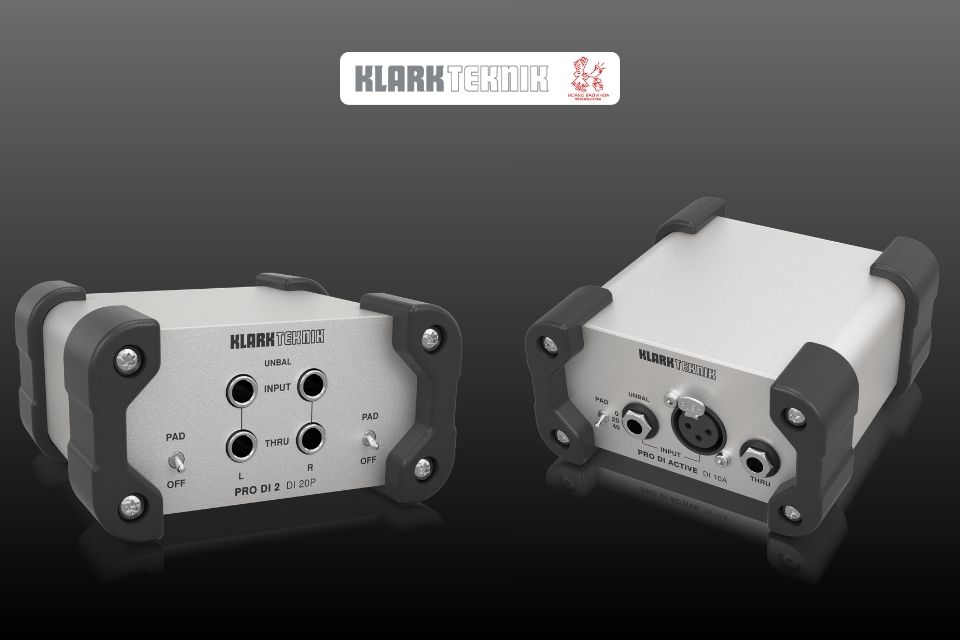
Klark Teknik DI Boxes are widely used in stages, touring systems, and recording studios thanks to their stable signal handling performance and designs optimized for real-world operating environments.
Some notable advantages include:
- Clean and clear output signals
- Effective noise rejection performance
- Rugged construction suitable for professional stages
- High operational stability during long-term use
- Easy integration with various audio system configurations
Models such as the DN100 and DN200 from Klark Teknik are trusted by many engineers because of their efficient signal handling and high reliability in live performance applications.
Conclusion
Both Active DI and Passive DI play important roles in Professional Audio systems.
The difference is not about which one is better, but which one is more suitable for the signal source and practical application requirements.
- Helps stabilize signals before reaching the mixer
- Reduces noise and signal loss
- Maintains consistent audio quality throughout the system
Choosing the right DI Box helps stabilize the signal, reduce noise, and preserve audio quality before the signal reaches the mixer.
For applications requiring high reliability, solutions from Klark Teknik together with consultation from Hoang Bao Khoa help optimize operational performance for professional audio systems.