An auditorium sound system is one of the key factors determining the effectiveness of information delivery and the overall experience of attendees. Whether for conferences, seminars, political events, training programs, or mid-scale performances, a properly designed auditorium sound system ensures clear, even, and intelligible sound throughout the entire space. Conversely, poor planning and implementation can result in uncomfortable audio, reduced program effectiveness, and a direct negative impact on the organizer’s professional image.
As auditoriums are increasingly used for multiple purposes, investing in and having a proper understanding of auditorium sound systems has become a necessary requirement, not only for facility managers, but also for businesses, educational institutions, and government agencies.
A complete auditorium sound system is a synchronized combination of multiple devices, each performing a specific role within the overall system. Depending on the scale and purpose of use, the system configuration can be simple or complex, but in general it consists of several core equipment groups.
Conference hall loudspeakers are the most critical component, responsible for delivering sound throughout the entire space. Choosing the appropriate speaker type, power rating, and coverage pattern directly affects speech clarity and sound uniformity. Accompanying the speakers are amplifiers or power amplifiers, which ensure stable and sufficient signal transmission.
.jpg)
Mixers and signal processing equipment serve as the system’s control center, allowing multiple audio sources such as Microphones, computers, and media players to be mixed together. In many modern conference hall sound systems, digital signal processors are used to calibrate, limit, and optimize sound performance according to the actual acoustic conditions of the space.
In addition, conference microphones, source devices, cabling systems, and installation accessories are also indispensable components of a professional conference hall sound system design.
Essential knowledge about conference hall sound systems
Conference hall sound systems have distinct technical characteristics compared to home audio or stage sound systems. The primary objective of a conference hall sound system is not to create strong effects or extremely high volume, but to ensure clear, intelligible speech that is easy to listen to and does not cause listener fatigue over long periods.
One of the most important factors is speech clarity, often reflected in the accurate reproduction of mid and high frequency ranges. Conference hall audio systems must prioritize vocal clarity while minimizing muddiness, echo, or distortion. Audio delay and sound reflections in large spaces also need to be addressed through appropriate acoustic design and system configuration.
Furthermore, a conference hall sound system must ensure high stability, ease of operation, and suitability for a wide range of users, from presenters to basic technical operators.
.jpg)
Factors affecting conference hall sound quality
Space size and architectural design
The size of the hall, ceiling height, and spatial geometry significantly influence how sound propagates. The larger the hall, the higher the requirements for system power and speaker coverage. Complex architecture, multiple angles, or high ceilings can make sound control more challenging.
Reflective and absorptive materials
Materials such as glass, concrete, and metal have high reflectivity and can easily cause echoes and reverberation. In contrast, sound-absorbing materials like curtains, carpets, and acoustic panels help improve speech intelligibility. Evaluating the materials within the space is an essential step in professional conference hall sound system design.
Speaker installation positioning
The placement and orientation of speakers directly determine sound coverage and uniformity. Incorrect speaker positioning can result in some areas being too loud while others lack clarity. Therefore, precise speaker placement is a key factor in an effective conference hall sound system.
Common mistakes in conference hall sound system installation
A common issue is poor speech intelligibility, which makes it difficult for audiences to stay focused and reduces communication effectiveness. This is often caused by inappropriate speaker selection, incorrect system configuration, or inadequate acoustic treatment.
Feedback and echo problems also frequently occur when Microphones and speakers are not properly arranged or when signal processing equipment is insufficient. These issues not only cause discomfort but also negatively impact the professionalism of the event.
.jpg)
Uneven sound coverage is another common problem in large halls when the sound system is not designed as a unified solution from the outset.
When should a conference hall sound system be upgraded?
Multi-purpose conference halls are the most common cases requiring system upgrades. When a space needs to accommodate conferences, training sessions, performances, or events, older systems often lack the flexibility to meet new demands.
Aging and deteriorating equipment over time is also a clear sign that an upgrade should be considered. Declining sound quality and frequent technical issues can directly affect hall operations.
Expansion requirements, increased audience capacity, or space renovations also necessitate a comprehensive reassessment and upgrade of the entire conference hall sound system to ensure long-term performance and efficiency.
Hoàng Bảo Khoa - optimized conference hall sound solutions for every project
Hoàng Bảo Khoa specializes in consulting and deploying comprehensive sound based on real project requirements. Each solution is developed according to the space characteristics, usage purpose, and specific operational needs of the project.
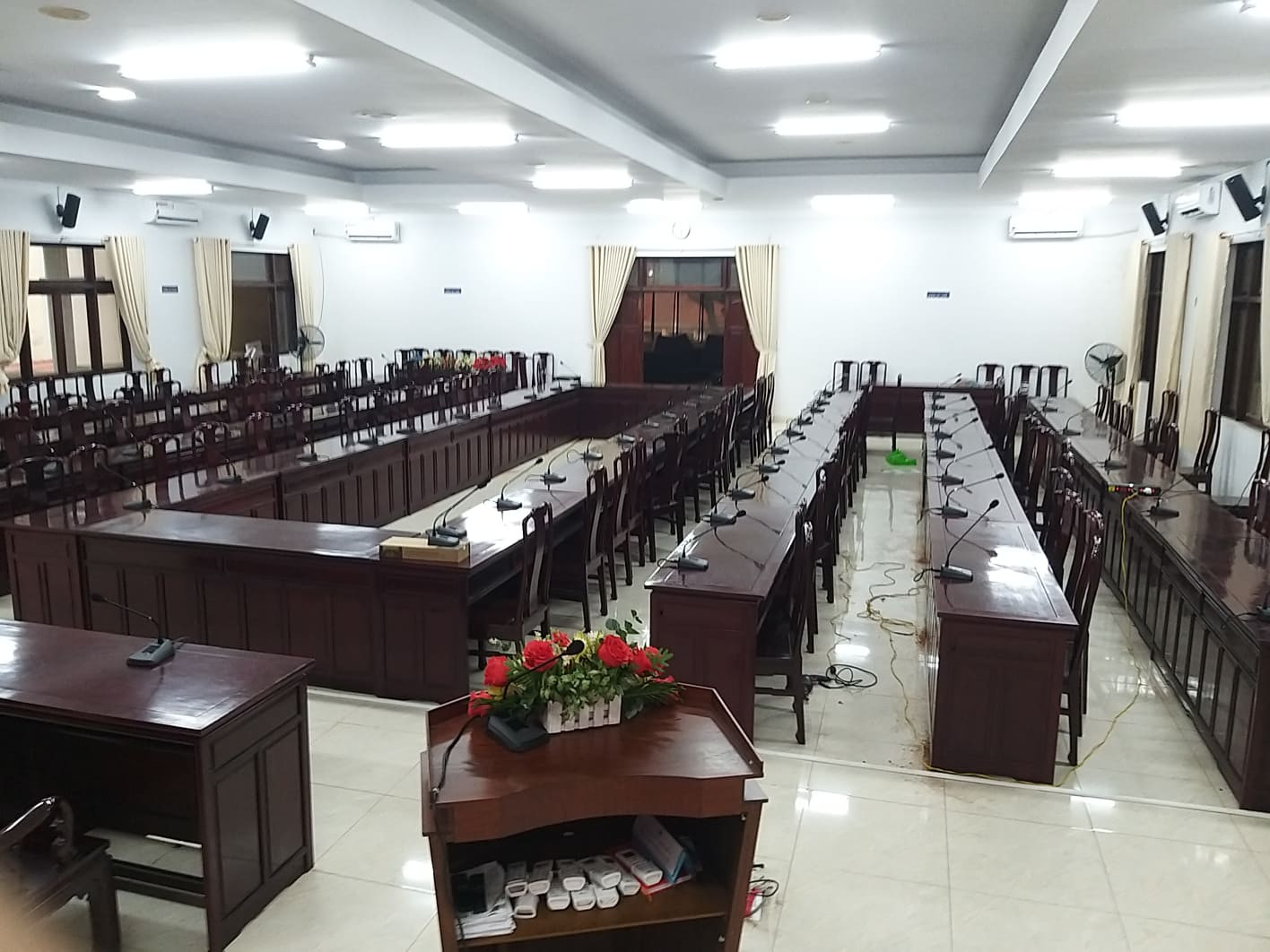
With experience in implementing various conference hall models, Hoàng Bảo Khoa provides genuine, synchronized conference hall audio equipment and supports professional system design and configuration. The solutions focus on speech clarity, even coverage, and long-term operational stability.
Choosing the right conference hall sound solution from the beginning not only optimizes investment costs but also ensures sustainable performance, meeting operational needs for many years to come.