After a period of use, many churches begin to experience issues such as reduced speech intelligibility, microphone feedback, degraded loudspeakers, or systems that no longer meet current needs. However, before deciding to replace equipment, it is essential to evaluate the entire system holistically. A well-informed investment can significantly reduce costs and deliver long-term performance benefits compared to making equipment changes based on intuition alone.
1. Do Parishioners Hear the Sermon Clearly in All Areas?
This is the first question that needs to be addressed.
If the front area of the church is too loud while the back is difficult to hear, the current sound system may not have proper coverage.
An effective church audio system must ensure that the congregation in every seating position can clearly hear the readings and sermon.
2. Does the System Frequently Experience Microphone Feedback?
Microphone feedback is one of the common signs that the system needs inspection.
The causes may include:
- Improper loudspeaker placement
- Microphones no longer performing optimally
- Lack of DSP processing
- Unoptimized system tuning
In many cases, adjusting the configuration or retuning the system delivers better results than purchasing additional equipment.
3. Is the microphone Quality Still Meeting Requirements?
The microphone is a critical device that directly affects input audio quality.
If the voice sounds muddy, unclear, or contains excessive noise, it may be time to reassess the Microphone system.
For choir areas, many parishes currently choose wired Sennheiser Microphones due to their stability and natural vocal reproduction.
For the priest’s area, wireless Sennheiser systems combined with Neumann KMS capsules are often preferred to enhance speech clarity.
4. Is the Lectern microphone Operating Effectively?
The lectern for proclaiming the Word is a very important position in every Mass.
If the reader constantly adjusts distance or experiences inconsistent volume levels, the current microphone setup may not be suitable.
Bizcom gooseneck microphones are widely used in churches due to their stable pickup and high aesthetic design.
5. Is the Loudspeaker System Suitable for the Current Church Architecture?
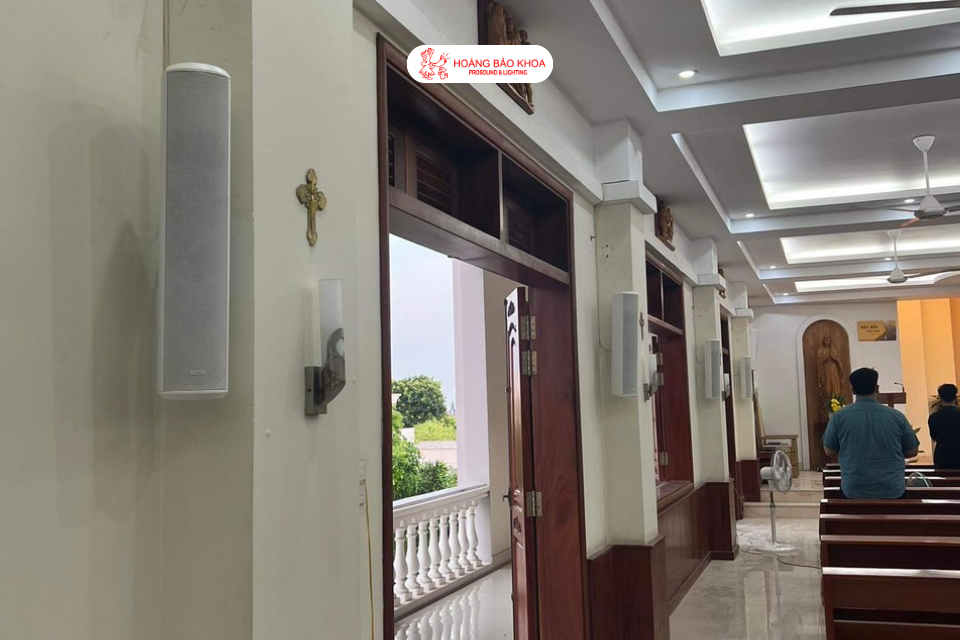
Many churches have expanded or renovated their architecture over time.
As a result, older sound systems may no longer meet actual requirements.
Common signs include:
- Uneven sound coverage
- Dead sound zones
- Poor intelligibility in rear seating areas
- Reverberation or echo issues
During system surveys, TANNOY or FBT loudspeaker solutions are often evaluated based on real architectural conditions rather than power ratings alone.
6. Does the Church Need Delay Speakers?
For long or large-capacity churches, using only front main speakers is often not enough.
Delay speakers help:
- Improve sound coverage
- Balance volume differences between zones
- Enhance speech intelligibility
This solution is commonly applied in modern church audio systems.
7. Has the DSP System Been Properly Optimized?
Many audio systems are fully equipped but not fully optimized due to improper signal processing.
DSP can support:
- Feedback suppression
- Frequency tuning
- Improved speech clarity
- Loudspeaker system synchronization
If the system has not been tuned for a long time, this is an area that should be inspected.
8. Does the Church Need Live Streaming or Recording?
Live streaming of Mass is becoming increasingly common.
If the church requires:
- Live broadcasting
- Event recording
- Liturgical content archiving
then the audio system must be designed to provide stable output signals for recording and streaming devices.
9. How Long Has the Current Equipment Been in Use?
Equipment lifespan is an important factor that should not be overlooked.
After many years of continuous operation, devices may experience:
- Degraded audio quality
- Component failures
- Difficulty sourcing replacement parts
A proper assessment helps determine whether to maintain, upgrade, or replace the system.
10. Will the System Meet Requirements for the Next 5–10 Years?
This is the most important question before investment.
A church audio system should not only meet current needs but also consider:
- Growth of the parish
- Future pastoral activities
- Liturgical music requirements
- Live streaming and communication needs
- Future expandability
Proper planning from the beginning is often more cost-effective than incremental upgrades later.
Don’t Just Replace Equipment, Evaluate the Entire System
A common mistake is replacing speakers when sound is unclear or changing Microphones when feedback occurs.
In reality, audio quality depends on the interaction between:
- Microphones
- Loudspeakers
- DSP processors
- Mixers
- Installation positions
- Acoustic characteristics of the space
Therefore, a full system survey is essential before making investment decisions.
At Hoang Bao Khoa, the consulting process typically begins with evaluating actual needs, architectural conditions, and current system status to provide the most suitable solution rather than focusing on individual devices alone.
Conclusion
Upgrading a church sound system is a long-term investment that directly impacts liturgical quality. Before replacing equipment, a full system evaluation helps identify the real issues and choose the most appropriate solution.
From Sennheiser choir microphones, wireless Sennheiser systems with Neumann KMS for the priest, Bizcom lectern Microphones, to TANNOY and FBT loudspeaker solutions, each device delivers its best performance only when integrated into a properly designed and synchronized system.