Auditorium sound systems play a vital role in conferences, seminars, performances, and large-scale events. Proper technical installation from the outset ensures clear audio, even sound coverage throughout the space, minimizes feedback issues, and guarantees stable, long-term system performance.
Space assessment before installing a professional hall sound system
Conducting a site survey is the first essential step to ensure the hall sound system is designed correctly and operates effectively.
- Determine the hall area, ceiling height, and overall spatial layout.
- Evaluate acoustic characteristics such as reverberation, echo, and wall and ceiling materials.
- Clearly define the intended purpose of the hall.
- Conferences and seminars.
- Cultural and performance events.
- Multi-purpose usage for various activities.
- The number of listeners and seating arrangement directly affect the speaker configuration.
- Thorough assessment helps select the right solution, avoiding power shortages or unnecessary investment.
Selecting suitable equipment for a hall sound system
All equipment should be selected as a synchronized system and matched to the hall’s scale and acoustic characteristics.
The speaker system is chosen based on room size and depth.
- Full-range speakers are suitable for small to medium-sized halls.
- Line array systems are ideal for large halls with long and deep spaces.
- Subwoofers enhance low frequencies, delivering fuller and more powerful sound.
Mixers and signal processors are responsible for overall sound control and optimization.
- Adjust volume levels, EQ settings, and feedback suppression.
- Ensure clear and intelligible speech throughout the hall.
- Power amplifiers must be properly matched to the speaker system.
- Ensure stable operation and prevent overload.
- Gooseneck Microphones are commonly used at podiums.
- Wireless microphones provide flexibility for speakers and stage performers.
Effective hall sound system layout and installation solutions
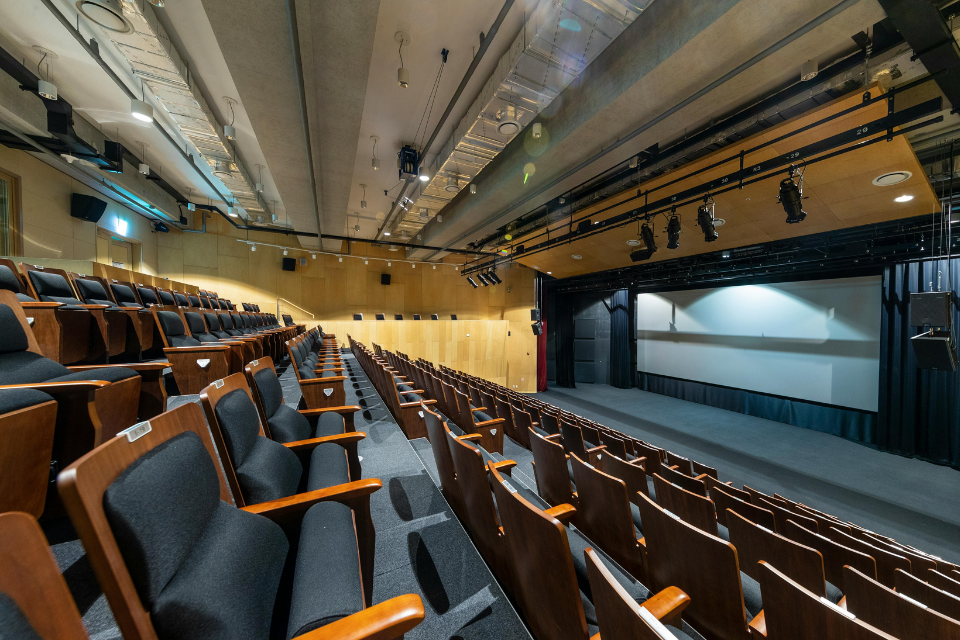
Proper layout and professional installation allow the sound system to perform at its best.
- Position speakers at correct coverage angles to distribute sound evenly.
- Suspended or floor-mounted speakers must ensure safety and visual aesthetics.
- Calculate delay and fine-tune the system to avoid sound timing issues.
- Signal and speaker cables should be neatly routed to minimize interference.
- Use rack cabinets and power management units for stable system operation.
Operation and maintenance of hall sound systems
The sound system should be designed for easy operation and long-term maintenance.
- Simple and user-friendly system design for operators.
- Preconfigured presets for different usage scenarios.
- Regular equipment inspections to maintain sound quality.
- Proper maintenance extends equipment lifespan and reduces technical issues.
Conclusion
Consulting and installing a hall sound system is not just about choosing equipment, but a comprehensive process from site assessment and system configuration to layout and operation. A technically well-designed system ensures clear, professional sound and long-term performance.
To achieve optimal results, working with an experienced hall sound system consultant is essential. Hoang Bao Khoa provides Professional Audio solutions, offering site surveys, system consultation, and implementation tailored to each specific venue.