After years of use, many churches begin experiencing audio issues such as unclear sermons, lack of detail in choir performances, or frequent feedback problems. When these challenges arise, one question is asked more than any other: should the speakers or the microphones be upgraded first?
At first glance, this may seem like a simple equipment decision. In reality, choosing the wrong upgrade priority can increase costs significantly while delivering only minimal improvements.
Not Every Church Audio Problem Is Caused by the Speakers
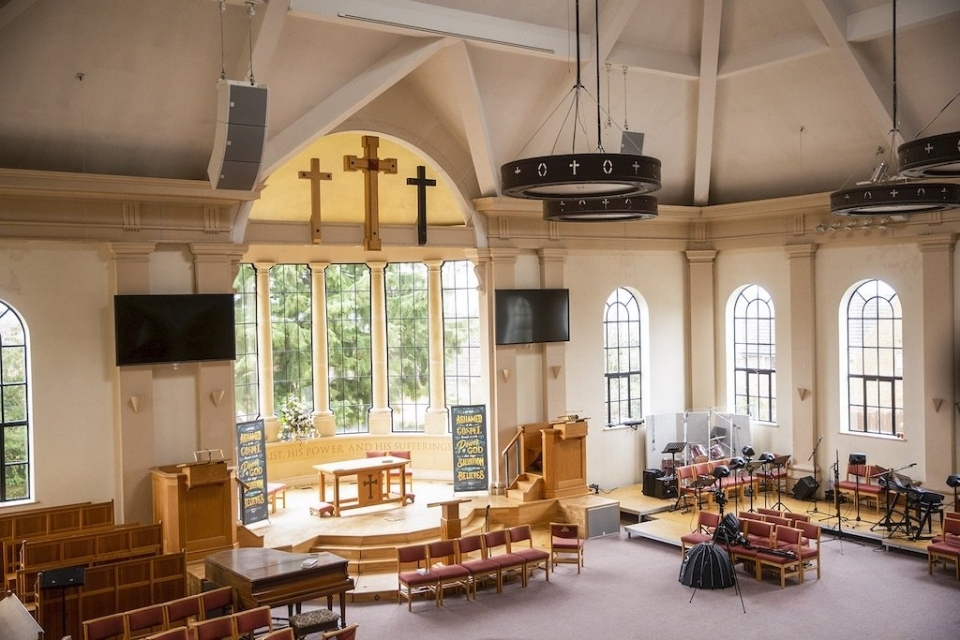
When congregants struggle to hear clearly, the first assumption is often that the loudspeakers need to be replaced. Since speakers are responsible for delivering sound throughout the church, this reaction is understandable.
However, sound quality can only be as good as the signal being sent to the speakers.
A church audio system functions as a complete signal chain. If the original audio source is weak or unclear, installing larger or more expensive loudspeakers may not solve the problem.
In many church installations, poor audio performance is often caused by:
- Aging Microphones with reduced performance
- Inconsistent voice pickup
- Improper Microphone placement
- Signal processing that has not been optimized
This is especially important in areas such as the sanctuary and lectern, where speech intelligibility directly affects how sermons and scripture readings are understood.
When Should Churches Prioritize Upgrading microphones?
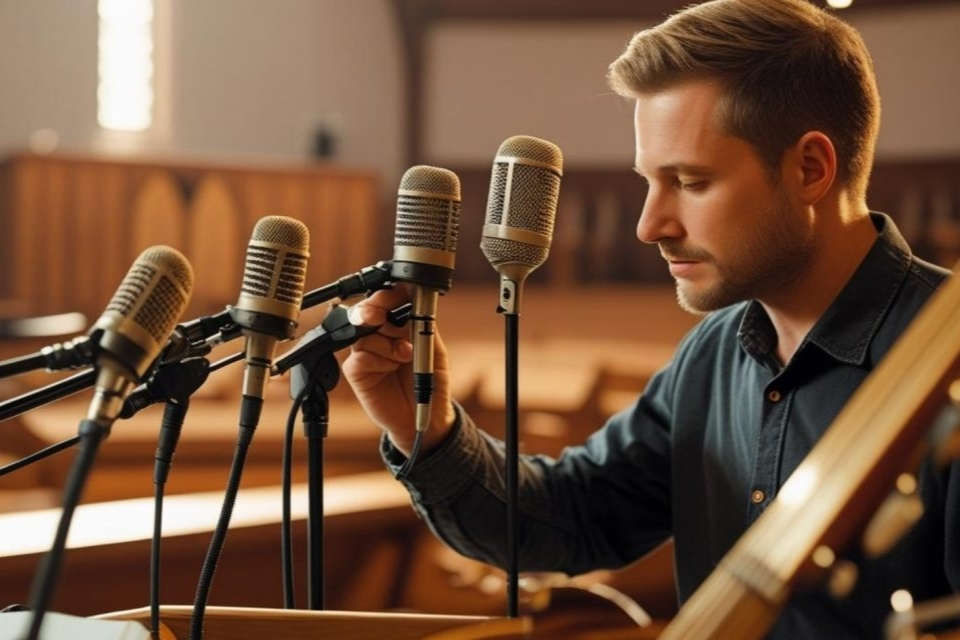
If the loudspeaker system is operating correctly but voices still sound thin, unclear, or lack detail at the source, upgrading Microphones may provide the most immediate improvement.
For choir applications, wired Sennheiser microphones are widely used because of their natural vocal reproduction and reliable performance.
For clergy and celebrants, Sennheiser wireless systems paired with Neumann KMS capsules can significantly improve vocal clarity, articulation, and overall speech quality.
At lecterns, Bizcom gooseneck microphones are often selected due to their focused pickup pattern and ease of use.
When the source signal improves, every component downstream benefits from the higher-quality audio.
When Should Churches Prioritize Upgrading Speakers?
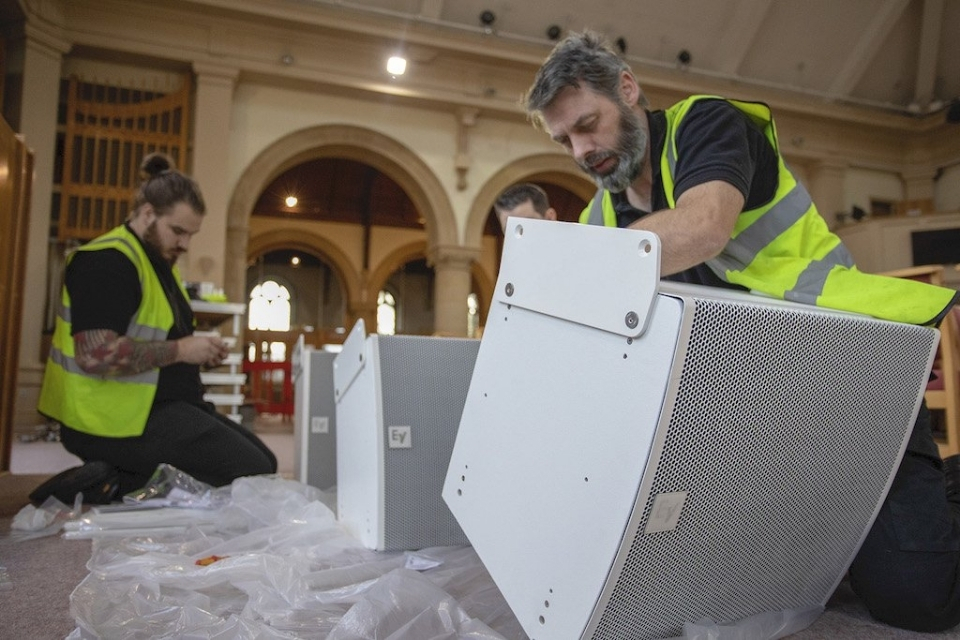
On the other hand, if the audio source already sounds clear but coverage remains inconsistent throughout the church, the loudspeaker system may require attention.
Common signs include:
- Adequate volume near the front but poor coverage at the rear
- Uneven sound levels between seating areas
- Excessive echoes or reverberation
- Speaker coverage that no longer matches congregation size
In these situations, evaluating the loudspeaker system becomes a priority.
Depending on the architecture and acoustic characteristics of the building, installed loudspeaker solutions from brands such as TANNOY or FBT may help improve speech intelligibility and overall coverage.
However, speaker upgrades should always be based on a professional assessment rather than brand reputation or power ratings alone.
The Real Answer Comes from a System Assessment
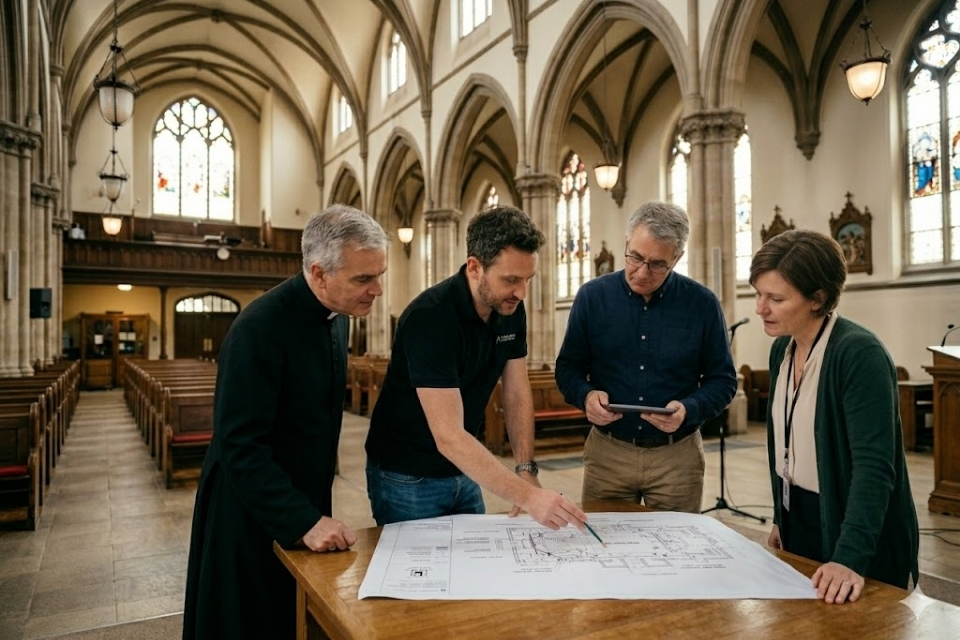
There is no universal answer that applies to every church.
Some churches achieve dramatic improvements simply by upgrading Microphones and retuning the system. Others require modifications to the loudspeaker layout or additional coverage solutions.
This is why a comprehensive system assessment should always come before any investment decision.
A professional evaluation typically includes microphones, loudspeakers, DSP processing, room acoustics, and actual usage requirements. By identifying the true source of the problem, churches can focus their budget on the areas that will deliver the greatest improvement.
Ultimately, the question should not be “Should we replace the speakers or microphones?” but rather “What is causing the problem?”
Once the root cause is identified, churches can make smarter investments, improve sound quality, and avoid unnecessary expenses in the future.