In a professional audio system, selecting high-quality equipment such as speakers, mixers, or amplifiers alone is not enough to ensure optimal sound performance. In reality, the sound output is also influenced by the acoustic environment, speaker placement, and the characteristics of each audio source. This is why EQ (Equalizer) adjustment becomes a critical step in the system setup process. So, what role does EQ adjustment play in an audio system? Understanding how EQ works helps achieve clearer sound, balanced frequency response, and an overall better listening experience for the audience.
What is EQ and How Does it Work in an Audio System?
EQ (Equalizer) is a tool used to adjust the intensity of different audio frequency ranges in a sound system. Instead of allowing the entire frequency spectrum to play at default levels, EQ enables audio engineers to boost or reduce specific frequency bands to achieve a balanced sound.
The basic audio frequency ranges include:
- Low (Bass): approximately 20Hz - 250Hz, providing depth and power to the sound
- Mid (Midrange): approximately 250Hz - 4kHz, greatly affecting vocals and musical instruments
- High (Treble): approximately 4kHz - 20kHz, adding brightness and detail
In an audio system, EQ can appear in various devices such as:
- Analog or digital mixers
- DSP signal processors
- Standalone equalizers in audio racks
With EQ, audio technicians can control individual frequency ranges to achieve clearer and more balanced sound.
How Does EQ Adjustment Improve Sound Quality?
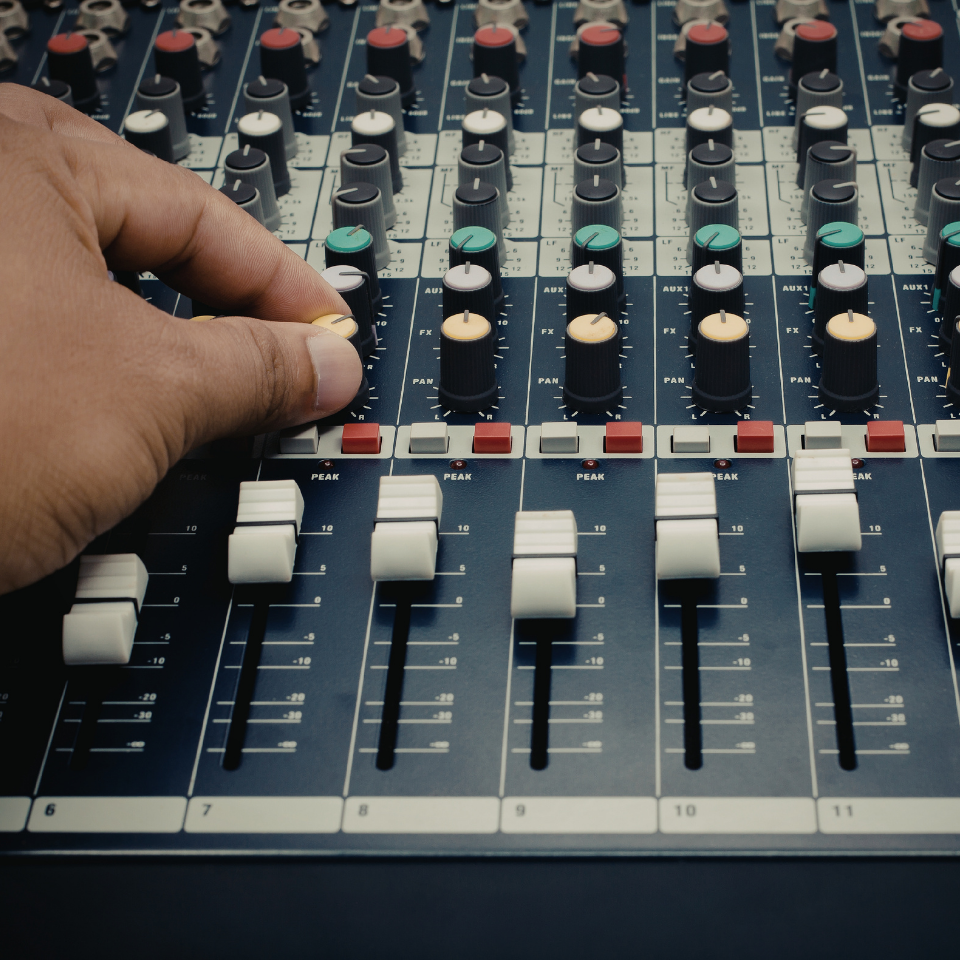
The main role of EQ is to optimize sound quality in real-world environments where many factors can influence how audio is perceived.
1. Balancing frequency ranges
Every speaker system and room has different acoustic characteristics. EQ helps to:
- Reduce overly strong frequency ranges
- Slightly boost frequencies that are lacking
This results in more balanced and comfortable sound.
2. Reducing Microphone feedback
In stage or auditorium sound systems, Microphone feedback often occurs when a specific frequency resonates excessively.
By:
- Identifying the feedback frequency
- Reducing that frequency using EQ
Technicians can significantly minimize feedback issues.
3. Improving clarity for vocals and instruments
EQ helps separate the audio elements in a mix:
- Vocals become clearer
- Instruments overlap less in frequency
- The overall sound becomes cleaner and more detailed
This is especially important in live performance or conference sound systems.
Important Notes When Adjusting EQ in an Audio System
1. Avoid boosting frequencies excessively
Over-boosting EQ may:
- Cause audio distortion
- Increase the risk of feedback
- Disrupt the overall sound balance
In most cases, technicians prefer cutting excessive frequencies rather than boosting too much.
2. Adjust EQ according to the acoustic space
Each environment has unique acoustic characteristics such as:
- Closed rooms
- Large auditoriums
- Bars or outdoor stages
Therefore, EQ settings should be adjusted based on the actual environment instead of using a fixed configuration.
3. Combine EQ with other system factors
EQ is only one part of the audio optimization process. For the best results, it should be combined with:
- Proper speaker placement
- Acoustic treatment of the space
- Correct gain and volume adjustments
Conclusion
EQ adjustment in an audio system plays an important role in optimizing real-world sound quality. With EQ, technicians can control frequency ranges, reduce microphone feedback, and improve the clarity of vocals and instruments.
When used correctly and combined with proper system design, EQ helps the audio system operate more efficiently, delivering a clear and balanced listening experience.