Not every instrument can be connected directly to a mixer while maintaining a stable signal. In many cases, audio may suffer from noise, signal loss, or reduced detail if a DI box is missing from the signal chain. This is why DI boxes are standard components in modern live sound, studio, and professional performance systems.
Why Do Guitar, Keyboard, and Bass Often Need a DI Box?
Electronic musical instruments typically use unbalanced signals and have different impedance levels.
When connected directly to a mixer, the signal can easily encounter problems, especially over long cable runs or in environments with many electrical devices operating simultaneously.
Some common issues include:
- Hum or background noise appearing in the signal
- Signal loss over long cable distances
- Lack of clarity and loss of audio detail
- Impedance mismatch between the instrument and the mixer
- Electromagnetic interference on stage
A DI Box helps solve these issues before the signal reaches the mixer, keeping the signal cleaner and more stable during operation.
When Should You Use a DI Box for Each Instrument?
Each instrument has different signal characteristics, so DI Box requirements also vary depending on the application.
Electric Guitar and Acoustic Guitar
A DI Box is commonly used when:
- Connecting a guitar directly to a mixer
- Long-distance signal cable runs are required
- Performing on stages with many electrical devices
- Reducing noise and maintaining signal clarity
- Using an acoustic pickup that requires a cleaner signal
Especially for acoustic guitars, a DI Box helps preserve more detail and the natural character of the sound before sending it to the PA system.
Keyboard
Although keyboards usually have relatively strong outputs, they still require DI Boxes in many situations:
- Providing a more stable stereo signal connection to the mixer
- Reducing interference on large stages
- Minimizing ground loop issues in the system
- Maintaining balanced signals over long cable runs
- Improving stability for line-level signals
Bass Guitar
Bass guitars can easily lose punch and clarity if the signal is not handled properly.
A DI Box helps:
- Keep the bass signal tighter and more stable
- Reduce low-frequency signal loss
- Minimize noise during live performances
- Match impedance before reaching the mixer
- Maintain clarity and dynamics in the bass signal
This is why bass guitars almost always use DI Boxes in Professional Audio systems.
Why Are Klark Teknik DI Boxes Chosen by Many Audio Engineers?
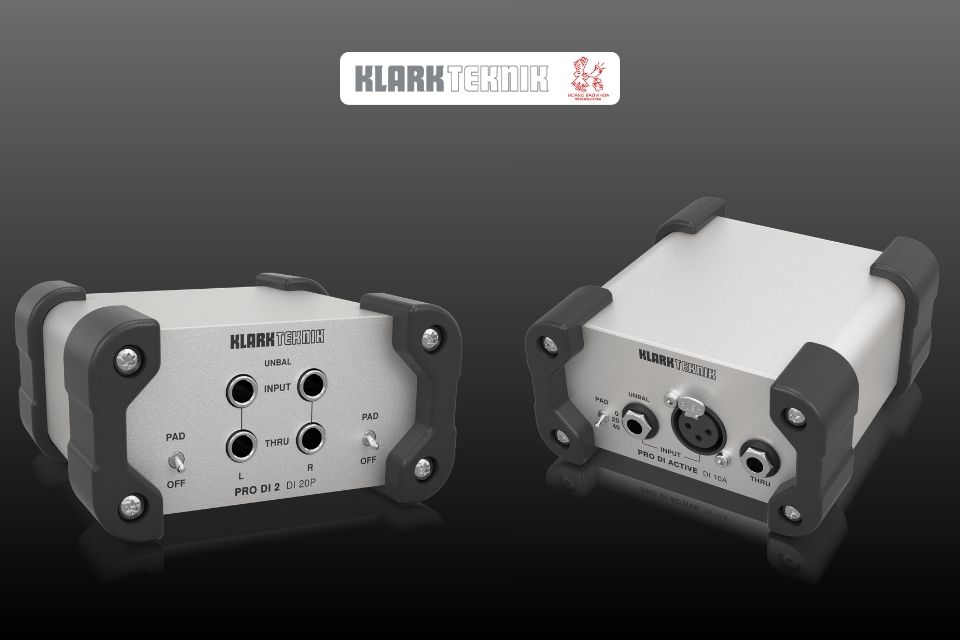
Klark Teknik DI Boxes are widely used on stages and in recording studios thanks to their stable signal handling performance and designs optimized for real-world operating environments.
Some key advantages include:
- Clean and clear output signals
- Effective noise rejection performance
- Stable operation over long cable runs
- Rugged construction suitable for touring and live shows
- Easy integration with various audio system configurations
Models such as the DN100 and DN200 from Klark Teknik are trusted by many audio engineers for their high stability and ability to maintain clean signals during performances.
Conclusion
A DI Box is not just a connection device but also an important solution for optimizing signals from guitars, keyboards, and basses before reaching the mixer.
Using the right DI Box helps reduce noise, minimize signal loss, and maintain more stable audio quality in real-world operation.
- Reduce noise and minimize signal loss
- Keep signals cleaner and more stable before the mixer
- Optimize operational efficiency for professional audio systems
For systems requiring high reliability, solutions from Klark Teknik together with consultation from Hoang Bao Khoa help optimize system performance and ensure stable signal operation in all performance environments.