In large-scale live shows, the ability for thousands of audience members in different positions to hear every detail clearly is not by chance. It results from the combination of system design, signal processing technology, and real-world operational expertise. When all factors are properly planned from the outset, the system delivers not only high SPL, but also maintains clarity, tonal balance, and consistent performance throughout the entire venue.
Speaker System Design and Sound Distribution in Space
The key factor in achieving even sound coverage lies in how the speaker system is designed and deployed.
In large-scale live shows, line array systems are commonly used to control sound direction and optimize coverage. Speaker arrays are flown and precisely angled to ensure consistent sound distribution from areas near the stage to distant audience zones.
In addition to the main system, supplementary speakers such as delay or fill are deployed to ensure that distant or obstructed areas still receive full audio coverage.
- Design speaker systems according to the actual venue layout
- Optimize line array angles for consistent sound coverage
- Use delay and fill speakers for specific zones
Proper distribution helps prevent situations where some areas are too loud while others lack sufficient sound.
Time Alignment and Signal Synchronization
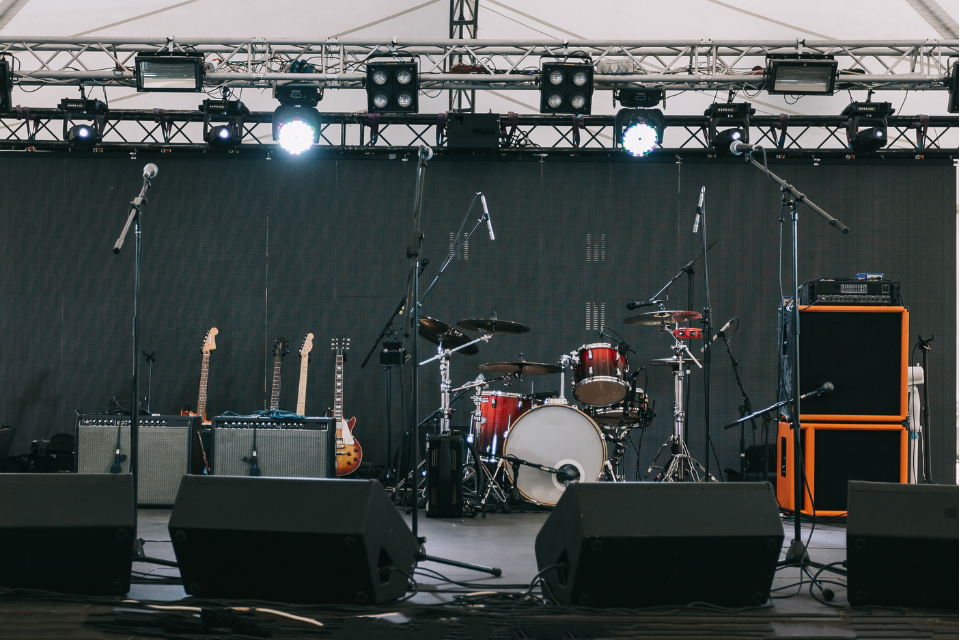
Sound clarity depends not only on volume but also on proper synchronization between speaker systems.
In large audio systems, if signals from different speaker clusters do not arrive simultaneously, phase issues and overlapping sound can occur, reducing clarity and causing discomfort for listeners.
Therefore, delay alignment between speaker clusters is a critical step during system setup.
- Ensure time alignment across all speaker clusters
- Avoid phase issues and signal overlap
- Use measurement tools and professional software
Audio engineers use specialized measurement tools and software to ensure consistent sound arrival at every audience position.
Frequency Management and Zone-Based EQ Control
Every venue has unique acoustic characteristics, making EQ processing essential for maintaining sound clarity.
Engineers adjust frequency ranges to highlight vocals and instruments while controlling frequencies that may cause muddiness or feedback.
In many cases, the system is divided into zones, with independent EQ adjustments tailored to each audience area.
- Adjust EQ based on acoustic characteristics of the space
- Control problematic frequencies that cause muddiness or feedback
- Divide the system into zones for precise optimization
Optimizing frequency response not only improves clarity but also reduces listener fatigue during long events.
The Role of Equipment and Operational Experience
Beyond system design, equipment quality and operational experience play a crucial role in overall sound performance.
Professional Audio brands such as FBT and Turbosound provide high-precision equipment that ensures accurate and stable sound reproduction.
However, even the best equipment only performs optimally when properly configured and operated.
- Use high-quality professional audio equipment
- Ensure correct system setup and configuration
- Leverage real-world experience of technical teams
Experience allows engineers to quickly identify issues and make timely adjustments, maintaining consistent sound quality throughout the event.
Conclusion
Clear sound in large live shows is the result of a well-coordinated design and operation process.
- Proper speaker system design and placement
- Accurate time alignment and signal synchronization
- Optimized frequency response and EQ for the space
- Combination of quality equipment and skilled operation
All these factors contribute to delivering a consistent audio experience for audiences in every position.
Understanding and applying these principles not only improves event quality but also highlights the importance of Professional audio solutions in large-scale productions.