Many congregants report that while they can hear the sound during Mass, they often struggle to clearly understand the message when seated in the rear pews. Surprisingly, this issue can occur even in churches equipped with high-powered loudspeaker systems. So, what is the real cause?
The Issue Is Not Speaker Power, But Speech Intelligibility
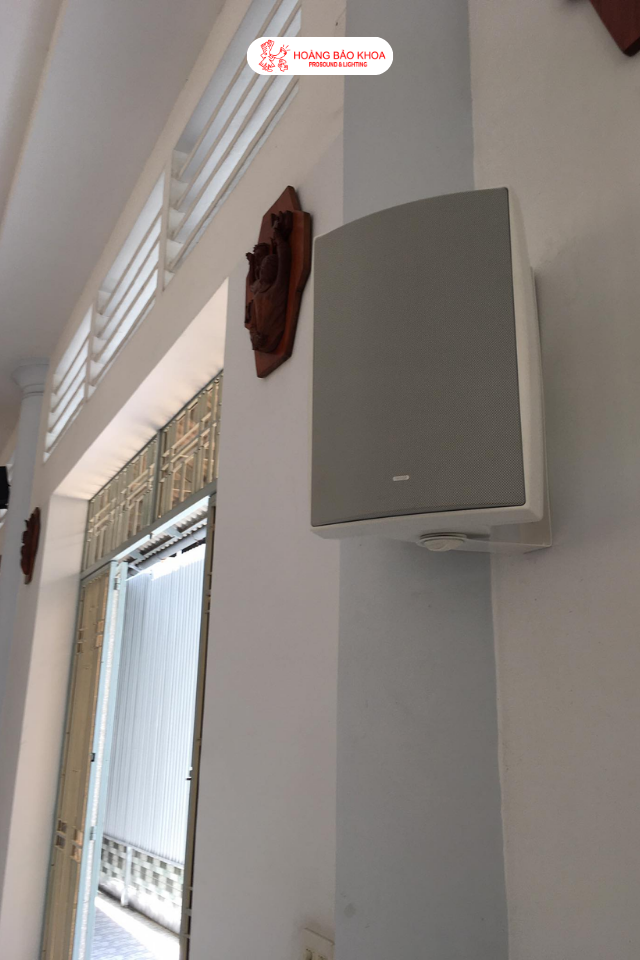
In a worship environment, the primary objective is not simply achieving high volume levels but ensuring that every reading, homily, and prayer can be clearly understood by the entire congregation.
When sound is projected from the main speakers near the sanctuary, it must travel a considerable distance before reaching listeners seated at the rear of the church. During this journey, the direct sound gradually weakens while reflections from walls, columns, and ceilings become increasingly prominent.
As a result, people seated at the back of the church often experience:
- Sufficient overall volume
- Excessive reverberation or echo
- Difficulty distinguishing consonants
- Audible sound but poor speech comprehension
This is why many churches experience the common problem of “loud sound but poor clarity.”
The issue becomes even more noticeable in buildings with high ceilings, vaulted architecture, or extended room lengths.
Why Increasing Volume Usually Doesn't Solve the Problem
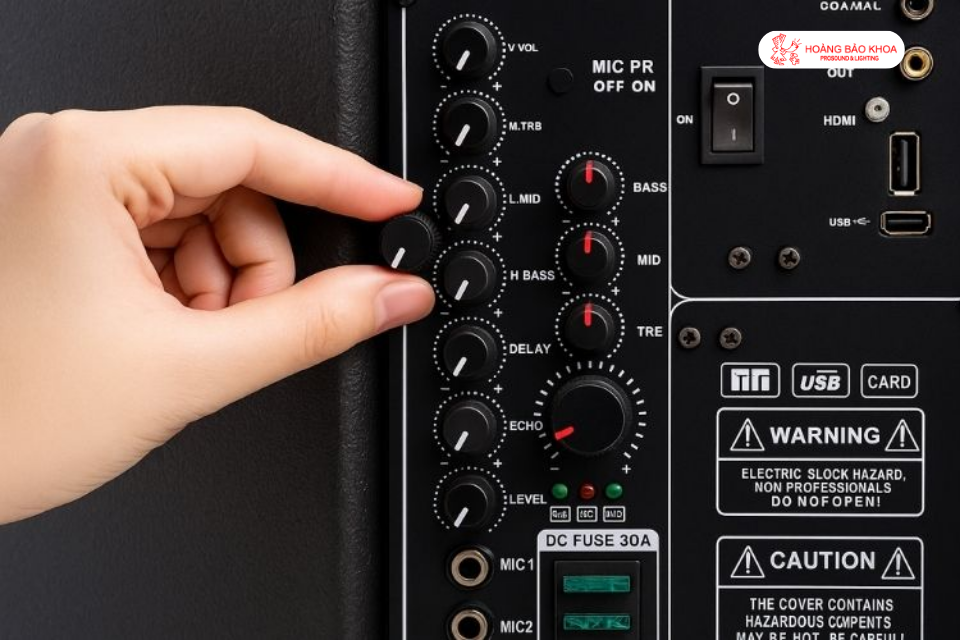
When members of the congregation report difficulty hearing clearly, the first reaction is often to increase the system's overall volume.
Unfortunately, this approach frequently creates additional problems.
When the system is driven harder:
- The front seating area becomes excessively loud
- Listeners near the speakers may feel uncomfortable
- The risk of Microphone feedback increases
- Room reflections become more pronounced
- Speech intelligibility improves very little, if at all
In other words, louder sound does not automatically mean clearer sound.
That is why modern church audio projects focus on sound coverage and speech intelligibility rather than simply increasing speaker power.
The Solution Lies in Overall System Design
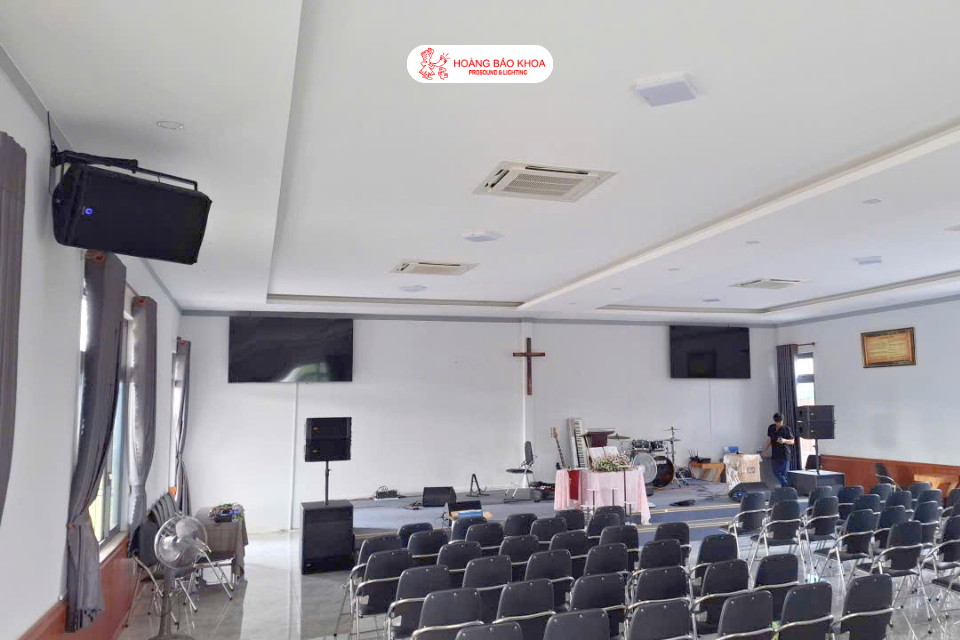
An effective church audio system must be designed according to the actual characteristics of the building.
Depending on the size, length, and architecture of the church, the solution may include:
- Optimizing speaker placement
- Adjusting speaker coverage angles
- Adding delay speakers for rear seating areas
- Using DSP to synchronize sound arrival times
- Creating properly distributed coverage zones
In many churches and chapels, TANNOY installation speakers are highly regarded for their ability to reproduce speech clearly while providing coverage patterns well suited to worship spaces.
For facilities that require both spoken-word reinforcement and musical performance, Italian-made FBT loudspeaker systems are also widely considered thanks to their balanced and detailed sound reproduction.
However, no single speaker configuration is ideal for every church. A proper site survey remains the most important step before selecting equipment.
Source Quality Also Determines Speech Clarity
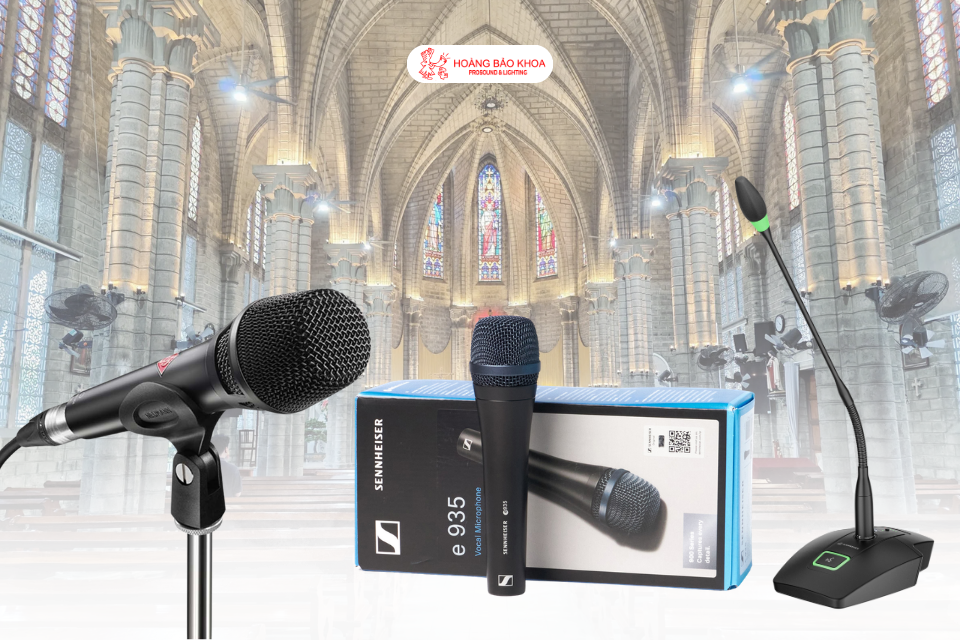
Even with a well-designed loudspeaker system, overall audio quality still depends heavily on the quality of the source signal.
A modern church audio system is typically divided according to specific applications:
- Wired Sennheiser Microphones for the choir
- Sennheiser wireless systems with Neumann KMS capsules for celebrants and preaching
- Bizcom gooseneck microphones for the lectern and scripture readings
- DSP processing for signal optimization before amplification and distribution
When these components operate together as an integrated system, speech intelligibility and message delivery can be significantly improved.
An Effective Church Audio Project Does Not Start with Choosing Speakers
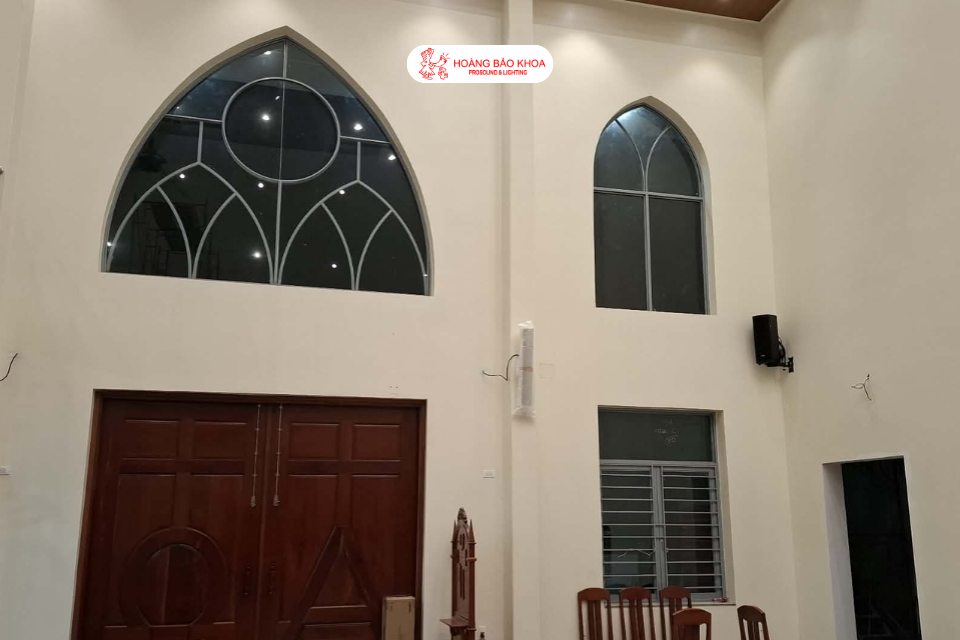
Many parishes begin by asking a simple question: “Which speakers should we buy?”
In reality, a successful church audio project begins with a comprehensive evaluation of the facility.
Technical consultants typically assess:
- Church architecture
- Room length and ceiling height
- Congregation capacity
- Requirements for preaching and sacred music
- The condition of the existing audio system
Based on these findings, a complete solution can be developed, including equipment selection, speaker placement, signal processing, and future expansion capability.
This is why Professional Audio providers often go beyond supplying products from brands such as Sennheiser, Neumann, Bizcom, TANNOY, and FBT. They also provide consultation, installation, system tuning, and long-term support for churches and chapels.
Conclusion
If people seated at the back of the church consistently struggle to hear clearly, the problem is usually not a lack of speaker power but rather the overall system design.
An effective solution requires proper integration of Microphones, loudspeakers, DSP processing, speaker placement, and the acoustic characteristics of the building. Careful planning and system design from the beginning not only improve speech intelligibility for the congregation but also optimize investment costs and ensure long-term performance for the church.