When building an audio system, many people tend to select an amplifier primarily based on its power rating. While common, this approach is incomplete. In reality, power is only one aspect of overall system performance. Ignoring other critical factors can result in a “powerful” amplifier that still delivers poor efficiency, instability, and fails to achieve the desired sound quality.
Power does not fully reflect real-world performance
Power rating is often considered an indicator of an amplifier’s strength; however, it does not fully represent its real-world performance.
Two amplifiers with the same rated power can deliver completely different results due to differences in circuit design, power supply, and signal control capabilities. A high-quality amplifier can maintain stable output over long periods, while lower-quality units may suffer from performance drops or distortion under heavy load.
Professional Audio brands tend to focus on real-world performance rather than just power specifications, ensuring stable operation across various conditions.
- Power rating does not fully represent actual performance
- Differences come from design and component quality
- Real-world performance is more important than nominal specs
Signal control and audio processing matter more
Modern amplifiers not only amplify signals but also play a key role in audio processing.
Factors such as low distortion, frequency control, response speed, and DSP integration all impact output quality. Amplifiers with DSP allow precise adjustment of EQ, limiter, and delay, helping the system operate more accurately and consistently.
Relying solely on power while ignoring signal processing capabilities can lead to poor control, imbalance, or distortion at high output levels.
- DSP enhances signal control and optimization
- Low distortion and fast response improve output quality
- Frequency control ensures balanced sound reproduction
Stability and long-term operation
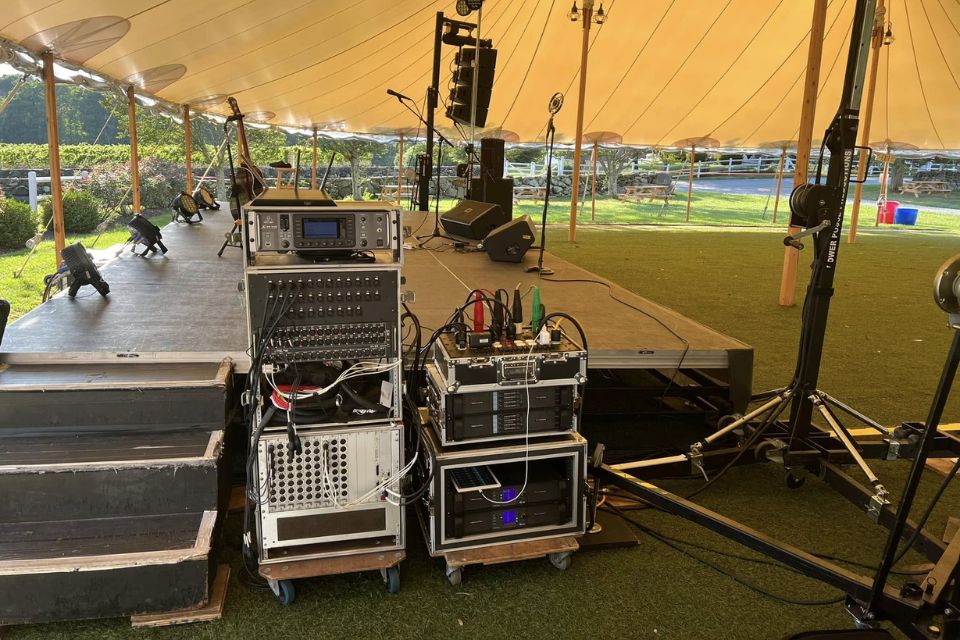
In real-world applications such as live events and stage systems, amplifiers often operate continuously under heavy load.
Thermal management, protection systems, and component durability are critical to maintaining stable operation without interruptions.
An amplifier with high power but poor stability can still pose risks to the entire sound system.
- Ensure efficient heat dissipation
- Include reliable protection systems
- Maintain stable performance over long periods
Conclusion
Power is an important specification, but it is not the only deciding factor when choosing an amplifier.
- Evaluate real-world performance instead of just power rating
- Prioritize signal processing and control capabilities
- Ensure long-term stability and durability
Selecting an amplifier should be based on overall performance to guarantee sound quality and system reliability over time.
Consulting experienced professionals can help optimize system configuration and reduce risks during operation.