The Neumann KH 120 II can operate independently in many nearfield monitoring setups without requiring a subwoofer. With a frequency response of 44 Hz to 21 kHz (±3 dB), it covers a wide range of recording and mixing applications. However, adding a subwoofer such as the KH 750 DSP can extend low-frequency reproduction and provide more detailed monitoring of bass and sub-bass content.
Can the Neumann KH 120 II Deliver Enough Bass on Its Own?
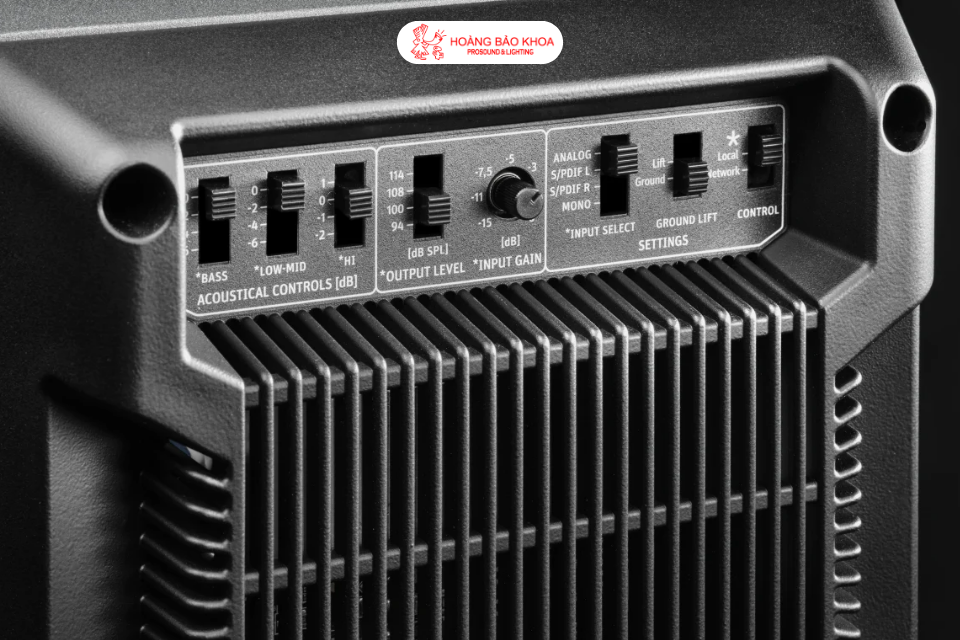
The Neumann KH 120 II is an active two-way studio monitor featuring a 5.25-inch woofer and a 1-inch tweeter. Designed for nearfield applications, it has a recommended listening distance of 1-2 metres, making it suitable for home studios, project studios and smaller control rooms.
According to Neumann's specifications, the KH 120 II has a free-field frequency response of 44 Hz to 21 kHz within a ±3 dB tolerance. This range is suitable for many recording, editing and mixing tasks.
Therefore, a subwoofer is not essential for every setup. If the production work does not require extensive monitoring of the sub-bass region, the KH 120 II can function effectively as a standalone monitoring system.
However, its 44 Hz lower frequency limit does not mean it can reproduce the entire low-frequency spectrum. When working with kick Drums, bass guitars, synthesizers or productions containing substantial sub-bass energy, a dedicated subwoofer can provide additional information below the main monitor's effective operating range.
When Should You Add a Subwoofer to the KH 120 II?
Adding a subwoofer can be beneficial in several situations:
- Producing bass-heavy music: Genres such as EDM, hip-hop and electronic music often contain significant low-frequency energy from kick Drums, bass instruments and synthesizers. A subwoofer helps monitor these elements more effectively.
- Monitoring sub-bass: During mixing and mastering, extended low-frequency reproduction helps evaluate bass levels, balance and the relationship between kick Drums and bass instruments.
- Requiring higher system output capability: With properly configured bass management, the subwoofer handles the assigned low-frequency content while the KH 120 II receives an appropriately high-pass-filtered signal. This can reduce the low-frequency workload of the main monitor's woofer and increase the system's available output capability under certain conditions.
A subwoofer does not automatically make a monitoring system more accurate. The result depends on proper integration, placement, room acoustics and system calibration.
How Does the Neumann KH 750 DSP Integrate With the KH 120 II?
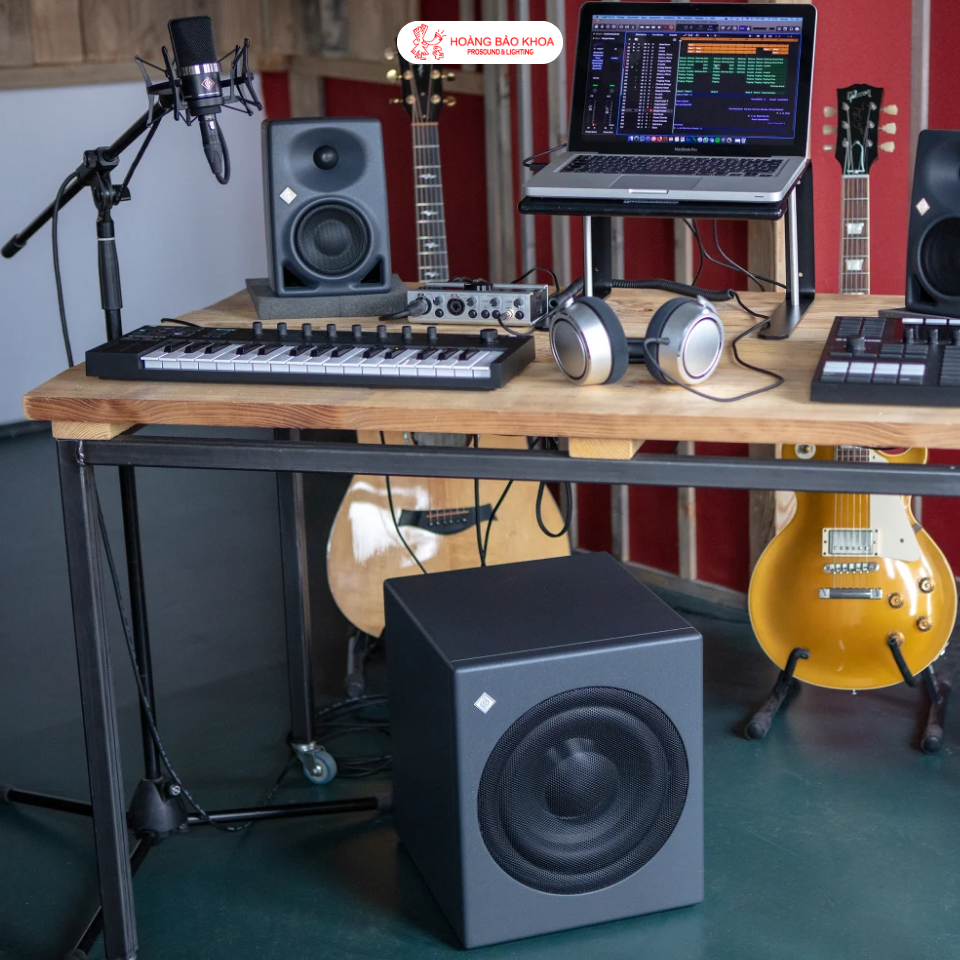
Within the Neumann ecosystem, the KH 750 DSP is a suitable option for extending the low-frequency response of the KH 120 II. It is an active subwoofer featuring a 10-inch driver, integrated DSP and a Bass Manager supporting 2.0/0.1 configurations.
When the KH 120 II is connected through the KH 750 DSP's outputs, the Bass Manager can distribute the signal between the main monitors and the subwoofer. In a bass-managed configuration, the subwoofer handles the assigned low-frequency content while the main monitors receive a high-pass-filtered signal. This means the KH 120 II no longer has to reproduce the entire low-frequency range.
The KH 750 DSP also supports MA 1 Automatic Monitor Alignment. Using a compatible measurement Microphone and MA 1 software, users can measure and optimize the system at the listening position, including amplitude and phase integration between the main monitors and subwoofer.
Correct signal routing and Bass Manager configuration are essential. Simply placing a subwoofer next to the main monitors and increasing its output level can lead to overlapping frequency ranges, uneven bass response or phase-related problems at the listening position.
Can a Subwoofer Replace Room Acoustic Treatment?
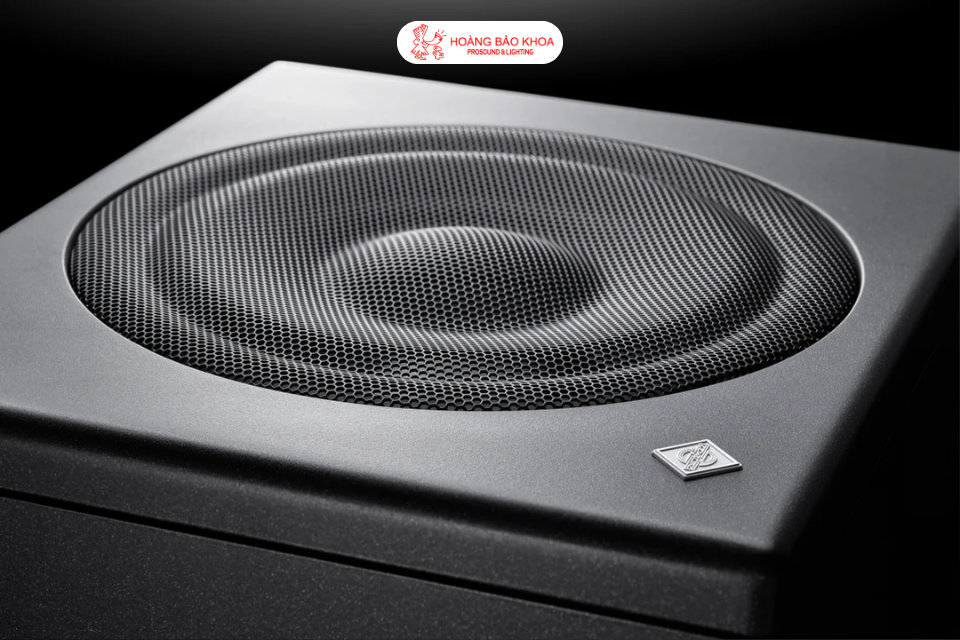
No. A subwoofer extends low-frequency reproduction but cannot replace proper room acoustic treatment.
At low frequencies, sound WAVES interact with room dimensions and boundaries, creating resonances or cancellations at certain frequencies and listening positions. As a result, some bass frequencies may sound excessively loud while others become noticeably weaker.
When integrating the KH 750 DSP with the KH 120 II, users should consider subwoofer placement, listening position and the frequency response at the listening location. The complete system should be measured and calibrated after installation to achieve appropriate integration between the main monitors and subwoofer.
MA 1 can assist with measurement and system alignment, but it cannot fully replace physical acoustic treatment when a room has significant acoustic problems.
Should You Use the KH 120 II Alone or With the KH 750 DSP?
The appropriate configuration depends on the production requirements and monitoring needs:
- Using the KH 120 II independently: Suitable for recording, editing and general mixing in home studios or project studios where extensive sub-bass monitoring is not required.
- Pairing the KH 120 II with the KH 750 DSP: Suitable for electronic music production, hip-hop, mixing and mastering bass-heavy content, or applications requiring more detailed sub-bass monitoring.
In conclusion, the KH 120 II does not require a subwoofer in every setup. If the work falls within the monitor's effective frequency range, using it independently is a practical choice. When extended bass response and more comprehensive sub-bass monitoring are required, the KH 750 DSP is a suitable integration option within the Neumann ecosystem.
To compare the KH 120 II operating independently with a subwoofer-integrated monitoring system, explore Studio Neumann or visit the Neumann Studio experience space at Hoang Bao Khoa. Listening to the systems in person can help you evaluate low-frequency performance and choose a configuration suited to your monitoring requirements.