The Neumann KMS 104 and KMS 105 are handheld condenser microphones designed for vocal performance. Their published specifications are largely alike, while their pickup patterns differ. This guide explains how cardioid and supercardioid response can influence microphone placement, monitor setup, and the choice for a particular stage.
Neumann Handheld Condenser Microphones: cardioid and supercardioid
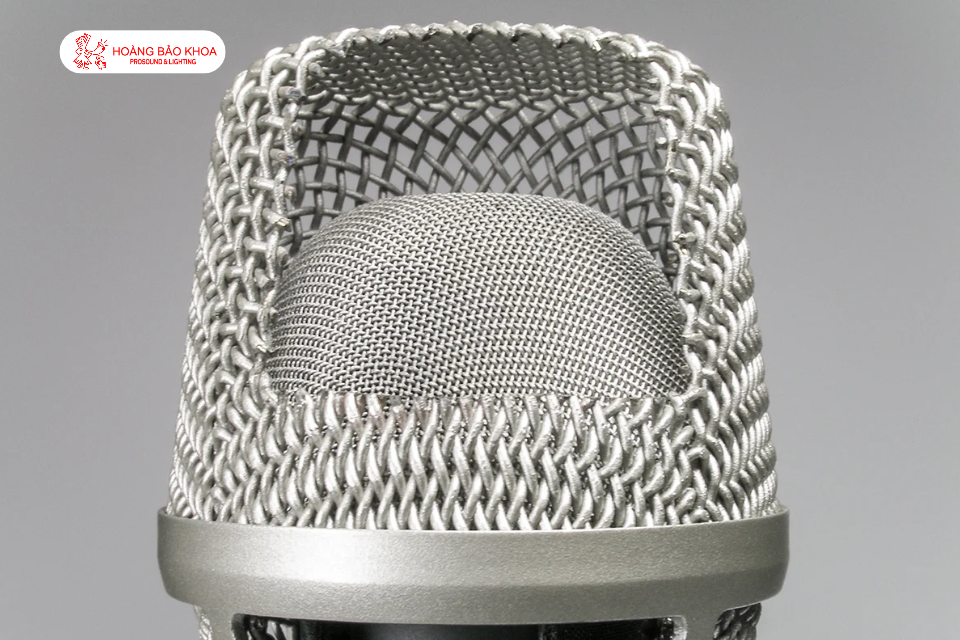
The KMS 104 uses a cardioid pattern, with its greatest sensitivity toward the front and reduced pickup from the rear. The KMS 105 uses a supercardioid pattern: its forward pickup area is narrower, with a small rear lobe. This makes Microphone and monitor orientation especially relevant when setting up a stage.
A supercardioid design does not guarantee better feedback rejection in every setup. Results depend on monitor angle, distance, room acoustics, and the performer’s handling technique. If performers move or turn frequently, the wider frontal pickup of a cardioid microphone may be simpler to manage; where placement can be controlled, a narrower forward response may suit the arrangement.
Neumann Vocal Condenser microphones: specification comparison
Both models are Neumann Vocal Condenser Microphones with a published frequency response of 20 Hz–20 kHz, sensitivity of 4.5 mV/Pa ±1 dB at 1 kHz into a 1 k& OMEGA; load, and rated impedance of 50 & OMEGA;. Maximum SPL is 150 dB at THD 0.5%. Each requires P48 phantom power, 48 V ±4 V, and draws 3.5 mA. Weight is approximately 300 g per Microphone.
| Specification |
KMS 104 |
KMS 105 |
| Pickup pattern |
Cardioid |
Supercardioid |
| Frequency response |
20 Hz–20 kHz |
20 Hz–20 kHz |
| Sensitivity |
4.5 mV/Pa ±1 dB |
4.5 mV/Pa ±1 dB |
| Maximum SPL |
150 dB (THD 0.5%) |
150 dB (THD 0.5%) |
| Phantom power |
P48, 48 V ±4 V |
P48, 48 V ±4 V |
Neumann Live Vocal Condenser microphones: choosing by stage

Consider the KMS 104 when singers need more latitude while moving across the microphone’s frontal area. Consider the KMS 105 when a more focused forward pickup fits the stage plan and monitor positions can be carefully managed. Try either model with the actual monitor placement and performance distance, since the room and stage layout affect the result.
Both Microphones are designed for close vocal work and include a protective grille and measures intended to reduce plosive noise. Neumann also notes possible use with some instruments. For a live setup, confirm that the mixer or preamp offers an XLR input and P48 power, then assess handling comfort and vocal tone at the intended distance.
These practical checks help narrow the choice within Neumann Handheld Condenser microphones. The two models share many headline specifications, so the pickup pattern and stage workflow are useful starting points rather than a claim that one is universally superior. For other recording applications, explore Neumann Microphones and compare each product’s intended use.
Hoàng Bảo Khoa shares product information to help users understand the differences between the KMS 104 and KMS 105. Further Neumann products and information are available on the hoàng bảo khoa website.