Shotgun microphones are designed to capture sound from a specific direction at a distance, making them widely used in film production, broadcasting and video recording. Their interference-tube design focuses sensitivity towards the front while reducing sound arriving from the sides. However, this directional capability does not mean that a shotgun microphone can completely eliminate surrounding noise.
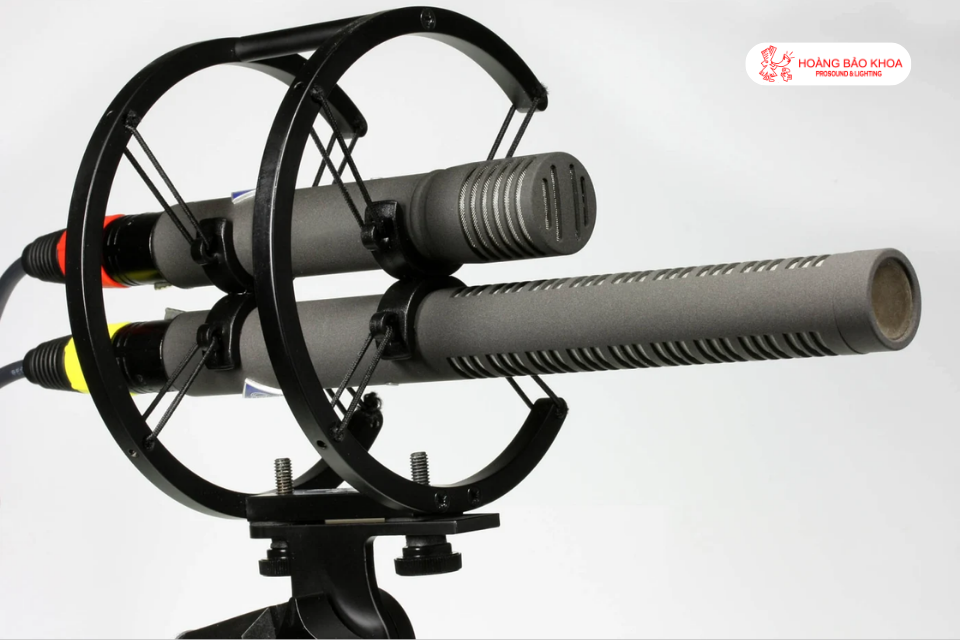
Neumann Shotgun Microphones are highly directional condenser microphones designed to capture a sound source in front of the microphone while reducing unwanted sound from other directions.
Unlike conventional cardioid Microphones, a shotgun Microphone has a long tube with acoustic slots positioned in front of the capsule. This structure uses the interference principle to increase the microphone's directionality. It is particularly useful for recording dialogue when the Microphone needs to remain outside the camera frame or at some distance from the speaker.
Neumann offers several shotgun models, including the KMR 81 i and KMR 82 I. The KMR 81 i is designed for medium recording distances, with an approximately 90° pickup angle, while the KMR 82 I has higher directivity and a narrower 45° pickup angle for applications requiring greater reach.
How Does the Interference Tube Help Capture Distant Sound?
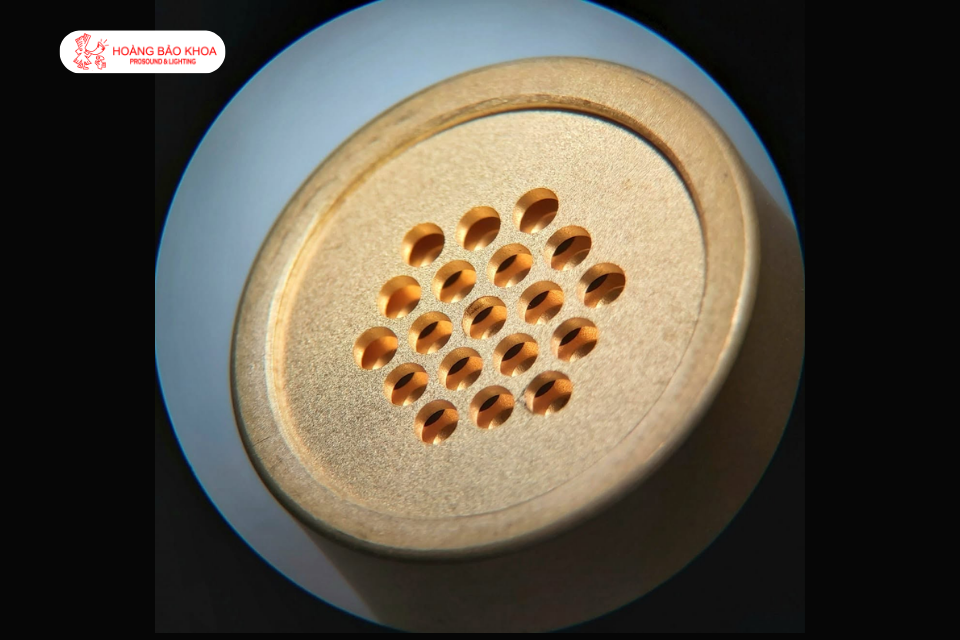
A shotgun microphone works through differences in the sound paths and arrival times of acoustic WAVES entering the slots along its interference tube.
When sound arrives from the front: Sound WAVES travel primarily towards the capsule, producing a clear signal. Sound from this direction is less affected by cancellation within the tube.
When sound arrives from the sides: Sound WAVES enter the tube through different slots and travel different distances before reaching the capsule. The resulting phase differences can cause destructive interference, reducing the microphone's sensitivity to off-axis sound.
This principle creates a narrower forward pickup region and reduces sound arriving from the sides. However, directivity depends on frequency and tube length. At lower frequencies, the interference effect becomes less effective, so a shotgun microphone cannot reject off-axis sound equally across its entire frequency range.
How Do Shotgun microphones Control Off-Axis Sound?
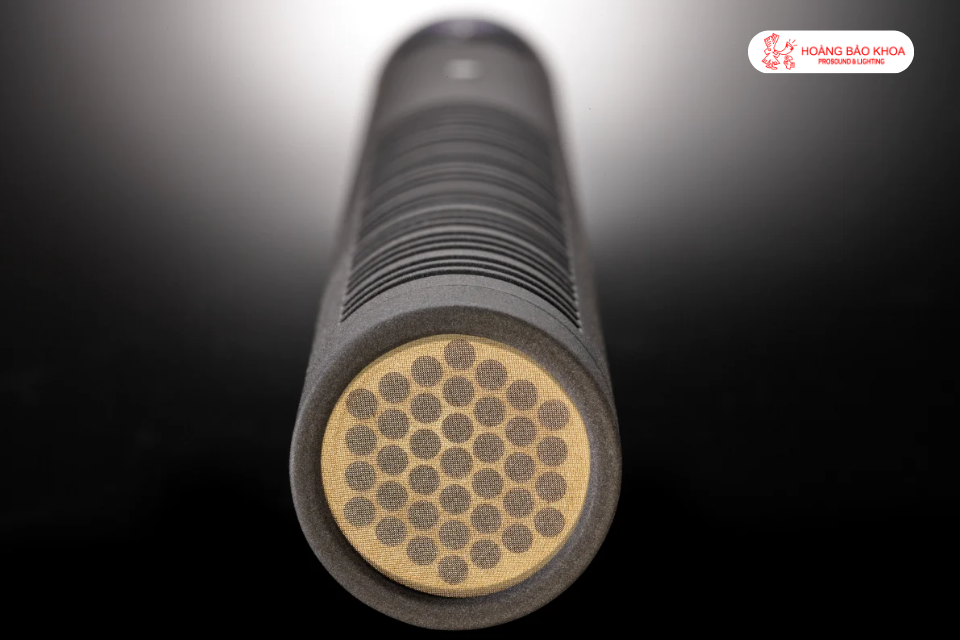
Off-axis performance is an important factor in determining the recording quality of a shotgun microphone. When a sound source is outside the main pickup direction, the microphone should reduce its level without significantly changing its tonal character.
In some shotgun microphone designs, off-axis sound can become noticeably colored because directional response varies with frequency. This may cause a speaker's voice to sound different when they move away from the microphone's main axis.
The Neumann KMR 81 i and KMR 82 I are designed to minimize this effect. According to Neumann, their lobe-shaped pickup patterns are frequency-independent, allowing off-axis sound to be attenuated without unwanted tonal coloration. This also helps sound engineers correct minor microphone alignment errors during post-production.
It is important to understand that a shotgun microphone does not simply make distant sound louder. Its main advantage is improving the ratio between the desired sound and unwanted sound through directionality. In a noisy environment or when the source is too far away, background noise and reflections can still be captured.
Neumann KMR 81 i vs. KMR 82 i
Neumann's two shotgun Microphones are designed for different recording situations, particularly in terms of pickup angle and working distance.
| Feature |
Neumann KMR 81 i |
Neumann KMR 82 i |
| Design |
Medium-length interference tube |
Long interference tube |
| Pickup angle |
Approximately 90° |
Approximately 45° |
| Directivity |
High |
Very high |
| Typical working distance |
Medium |
Longer distances |
| Typical applications |
Film dialogue, ENG and video recording |
Distant dialogue and situations requiring a narrower pickup area |
The KMR 81 i is suitable for recording dialogue at medium distances while allowing some flexibility when the speaker moves. The KMR 82 i has a narrower pickup region and is better suited to focusing on a distant sound source when accurate microphone positioning is possible.
Factors That Affect Long-Distance Recording Performance
Even with a highly directional shotgun microphone, recording quality still depends on microphone placement and environmental conditions.
- Distance from the sound source: As the microphone moves farther away, direct sound decreases relative to ambient sound and reverberation. Therefore, position the microphone as close to the source as possible while keeping it outside the camera frame.
- Microphone aiming: The microphone's main axis should be accurately directed towards the sound source. Incorrect alignment can reduce dialogue clarity.
- Acoustic environment: Reflective rooms and noisy outdoor locations can affect recording quality. A shotgun microphone cannot replace acoustic treatment or noise control.
- Wind and vibration: Outdoor recording requires suitable wind protection and shock-mount systems to reduce wind noise, handling noise and mechanical vibration.
Long-distance recording performance therefore depends not only on the microphone itself but also on distance, aiming, the acoustic environment and operating technique.
To learn more about Neumann Video microphones and Neumann Microphones For Video Recording, explore Studio Neumann or discover the Neumann Studio experience space at Hoang Bao Khoa. It offers an opportunity to learn about Neumann equipment and its applications in Professional Audio production.