Microphones often specify whether their output uses a transformer balanced or transformerless design. So, what do these two designs mean, and how do they affect the sonic characteristics of a microphone? The following article explains the principles of balanced signal transmission, the role of the transformer, and the differences in sound between the two designs.
What Does Balanced Mean?
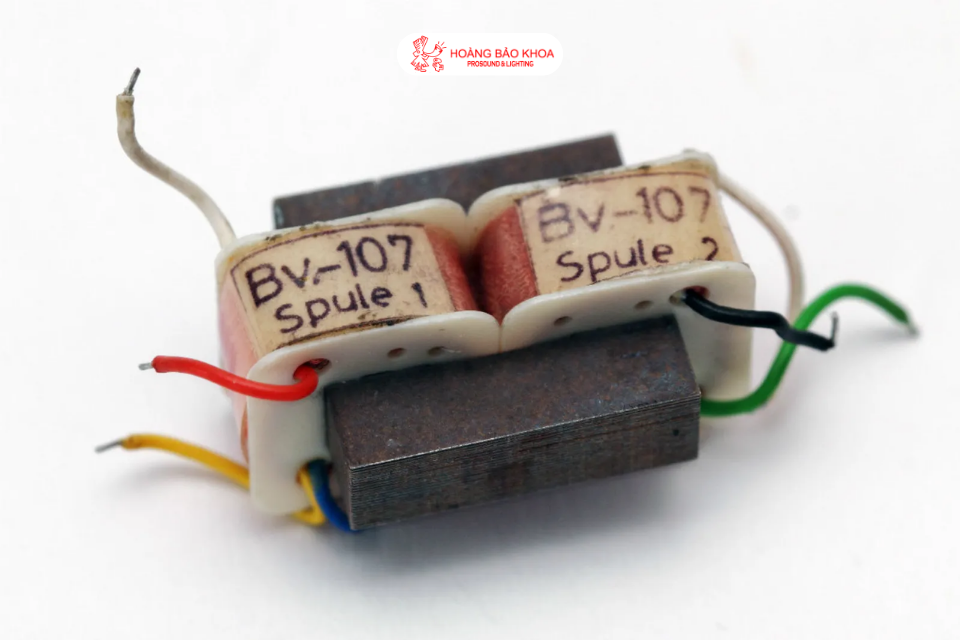
Studio Microphones always use balanced outputs. Balanced means that the signal has two signal paths and a separate ground connection, which is typically the cable shield.
In contrast, an unbalanced output, such as the one on an electric guitar, has only one signal path together with the cable shield. An audio signal, electrically speaking, always requires two connections. With a guitar, the output signal is referenced between the signal path and the cable shield.
In microphones and devices with balanced outputs, the audio signal is referenced between two signal paths. This structure helps reduce interference caused by external electric fields, such as buzz and hum.
For example, if a Microphone cable runs near a power line, alternating current (AC) can induce a small current, corresponding to 50/60 Hz hum, on both signal paths. However, you will not hear this interference because the microphone preamp uses a circuit called a differential amplifier.
This circuit amplifies the difference between the two signal paths. Since the hum is induced equally on both signal paths, there is no voltage difference in the hum. Therefore, the preamp only amplifies the Microphone signal between the two signal paths without amplifying the hum, which has the same voltage on both paths.
How Is Output Balancing Achieved?
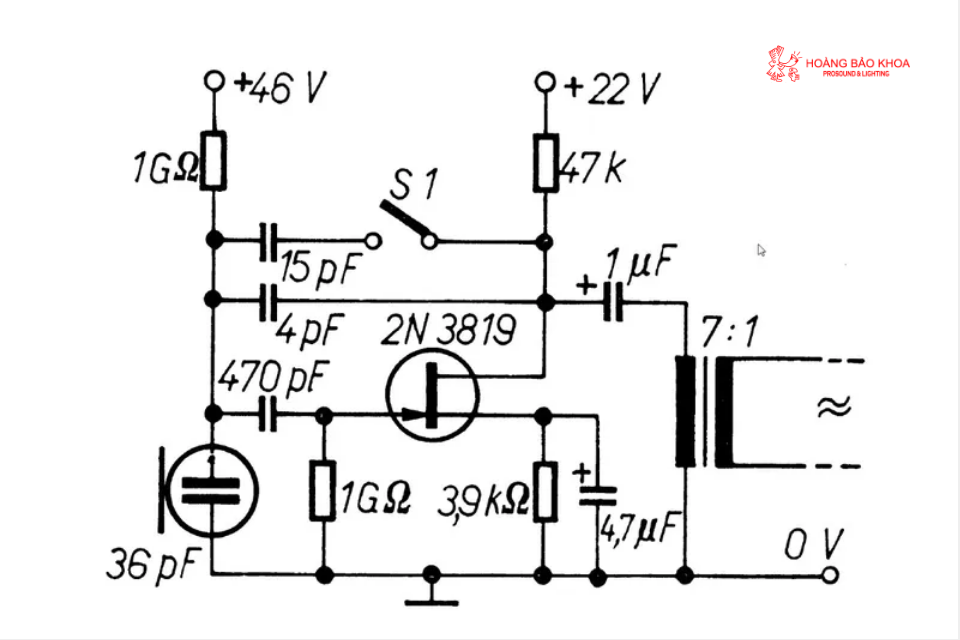
There are several ways to create a balanced output.
With a dynamic microphone using a moving coil, this is relatively straightforward: the two signal wires from the capsule are connected directly to pins 2 and 3 of the XLR.
This cannot be applied in the same way to a condenser capsule because the capsule requires electronic circuitry to convert the extremely high-impedance signal into a low-impedance output. Therefore, the output of this impedance-conversion circuit needs to be balanced using an appropriate method.
Traditionally, this was achieved using an output transformer. This technology was particularly convenient with electronic circuits using tubes and early transistors, as the transformer could also perform the final stage of impedance conversion.
A tube or FET performs the first stage, followed by a step-down transformer handling the second stage of impedance conversion. This allowed the circuit to be designed very simply with a relatively small number of components.
The Emergence of Transformerless Design
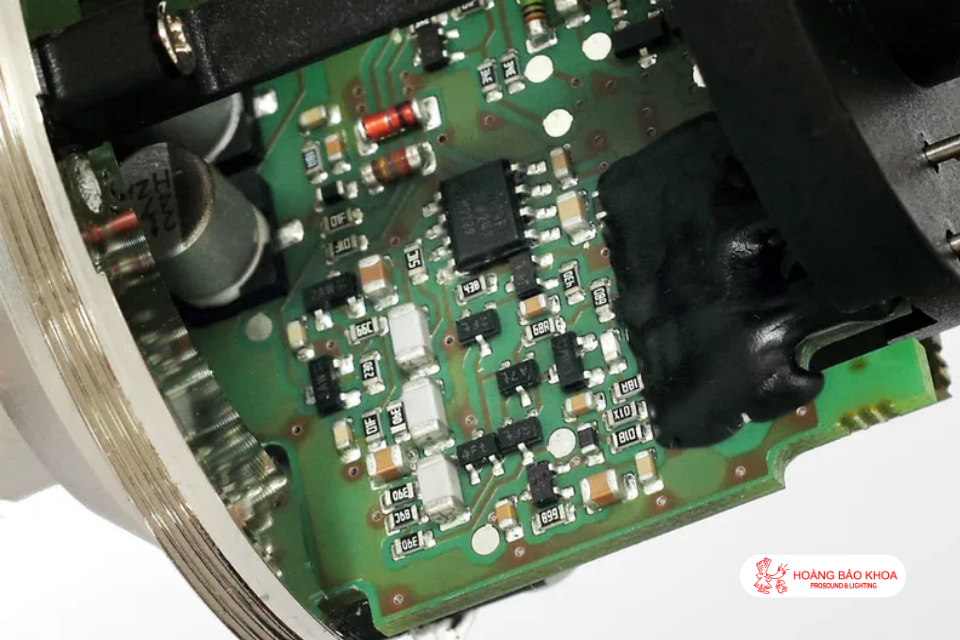
In the late 1970s and early 1980s, transformerless outputs became a new trend among audio purists.
During the same period, Neumann introduced the TLM series, with TLM standing for transformerless Microphone.
At the time, audio transformers were considered outdated technology and potentially capable of interfering with the most direct sound experience. To understand why, it is necessary to look at the context of the time: transformers were not only found in Microphones but were present at many points throughout the audio system.
A typical broadcast console at the time could contain dozens, or even hundreds, of audio transformers. Replacing transformers that were not truly necessary with electronically balanced circuits was considered a sensible approach.
This not only promised to reduce changes in tonal coloration but also helped reduce costs. While other electronic components such as transistors and op-amps were becoming increasingly inexpensive, high-quality transformers remained costly.
Transformers and Changes in Tonal Coloration
When transformers were present at every stage of the signal path, the changes in tonal coloration introduced by transformers were often considered undesirable.
Today, most studio equipment uses transformerless designs, and their sound is indeed more transparent. Many audio engineers are satisfied with this characteristic.
However, some engineers, particularly in pop, rock, and hip-hop, believe that overly transparent sound can be somewhat bland and prefer to add a touch of vintage character. As a result, transformer-balanced equipment has become popular again.
Do Transformers Really Change the Sound?
Audio transformers do have an effect on tonal coloration, but the degree of influence is not as significant as many people think, particularly when it comes to microphones.
Transformer-balanced Microphones are often considered to have smoother high frequencies and deeper low frequencies. However, a well-designed audio transformer can transmit frequencies beyond the range of human hearing. Therefore, the transformer does not limit or smooth the treble range in an audibly noticeable way.
In practice, transformers often have a slight resonance above 20 kHz, giving the high frequencies a sense of openness and “air”.
Transformers can also exhibit a slight resonance at the lower end of the frequency spectrum, which can create the impression of a fuller low end.
What Are the Advantages of Transformerless Design?
Transformerless microphones typically have a more extended frequency response at both the high and low ends.
More importantly, transformerless microphones can handle significantly higher signal levels before distortion occurs.
There is a common belief that transformer distortion produces a pleasing sound character. However, this is not entirely accurate. Transformer distortion primarily produces uneven harmonics and does not increase gradually.
When the transformer core enters saturation, distortion increases very rapidly to a level that becomes unpleasant or even unusable.
It is also important to note that microphone signal levels are relatively low in most cases, so there is virtually no transformer distortion when recording vocals or guitar.
Distortion can occur when recording Drums. However, as mentioned, this may not be the type of distortion that users want.
In addition, transformer distortion is frequency-dependent. At low frequencies, the transformer becomes distorted at much lower signal levels than at high frequencies.
There are very few transformer-balanced microphones that can be used for kick drum. One well-known exception is the Neumann U 47 FET, a microphone featuring an unusually large transformer.
Transformer Balanced and Transformerless: Is the Difference Easy to Recognize?
If two microphones use the same capsule design, it is not always easy to identify the sonic difference between transformer-balanced and transformerless microphones.
This shows that evaluating the two designs should not be based solely on the difference in transformer architecture, but should take the entire microphone design into consideration.
Transformer Balanced or Transformerless: Which Is Better?
The answer may differ depending on whom you ask.
In practice, very few microphones are available in both transformer-balanced and transformerless versions. Therefore, people often generalize from their experience with different microphones of each type.
Many transformer-balanced microphones, such as the Neumann U 87, originated in the 1960s and 1970s, a period when most audio engineers preferred a relatively soft sound character.
In contrast, transformerless microphones such as the Neumann TLM 103 became popular later, in the 1980s and 1990s, when most engineers wanted a brighter and more modern sound character.
Therefore, if these microphones sound different, the reason is not simply the change in technology, but is largely related to changes in sonic aesthetics over different periods.
Audio transformers do introduce a certain degree of tonal coloration, but much less than is often assumed.
Transformer-balanced microphones tend to provide a slightly fuller low end and a slightly more open high end. The sonic image also feels less direct.
In contrast, transformerless microphones use electronic balancing and can handle high sound pressure levels, even at extremely low frequencies.
If the goal is a sound with good punch and a very direct character, transformerless is a suitable choice.
In addition to sonic considerations, electronic balancing is also more cost-effective than a high-quality audio transformer. Therefore, if you want high sound quality at a reasonable price, transformerless microphones such as the Neumann TLM 102 or TLM 103 can be chosen.
Finally, it is important to remember that at least 90% of a microphone's sound comes from the capsule.
Exploring Microphones in a Real Studio Environment
The differences between transformer-balanced and transformerless designs are part of microphone design and help shape their sonic characteristics. Understanding these principles gives users a better basis for exploring and selecting microphones for their recording needs.
At Hoang Bao Khoa, Neumann Studio is a space where customers can directly listen to and experience Neumann products in a real studio environment, giving them a better basis for perceiving the differences between different designs and choosing one that suits their needs.