Self Noise is one of the important specifications when evaluating a microphone, because no one wants noise in a recording to affect the music. Particularly with quiet sound sources or recordings that require a high level of cleanliness, a microphone’s noise level can directly affect signal placement and the ability to control the signal in the studio.
What Is Self Noise?
Self Noise is the signal generated by the Microphone itself even when there is no external sound source.
For condenser Microphones, this specification is usually expressed as Equivalent Noise Level. However, the more commonly used term is Self Noise.
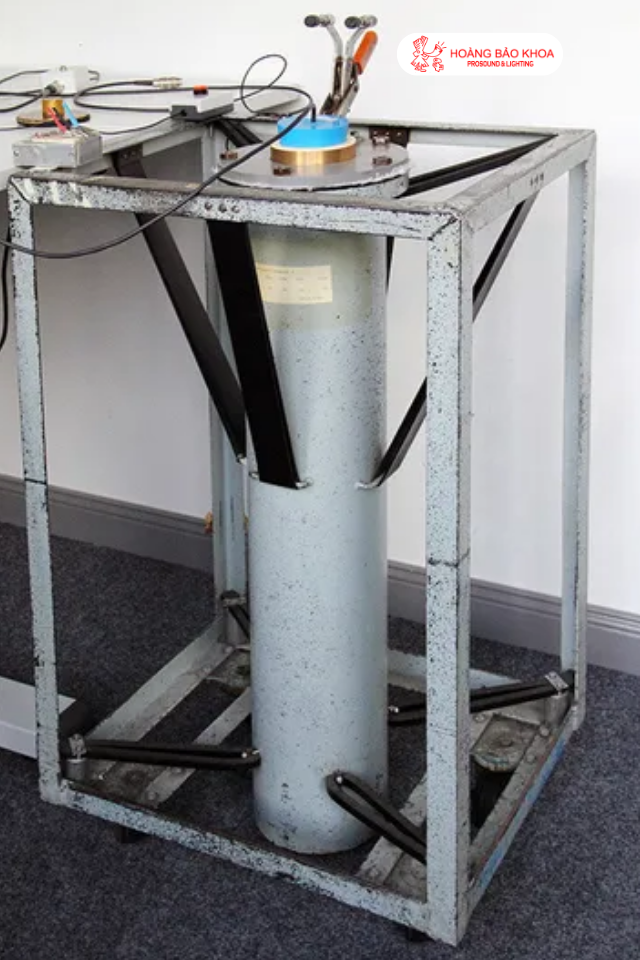
The accurate way to measure Self Noise is to place the entire microphone in a soundproof environment and measure the signal generated by the Microphone itself.
However, some manufacturers only measure the microphone without including the capsule. This method can produce numbers that appear better.
Self Noise is usually expressed in dB-A. The “A” refers to A-weighting, a measurement method designed to simulate how humans perceive sound.
For example, the human ear is less sensitive to noise at lower frequencies than to noise in the midrange, where human speech is located.
Why Is Low Self Noise Important?
Noise can become a limitation during the recording process.
A Microphone with a relatively high noise level needs to be placed very close to the sound source to achieve an acceptable signal-to-noise ratio.
In contrast, a microphone with a low noise level gives users much greater flexibility when choosing microphone placement.
Therefore, low microphone noise is not simply a technical specification. It provides greater creative freedom and flexibility in microphone placement.
What Level of Self Noise Is Considered Good?
Neumann divides Self Noise levels into different ranges to evaluate a microphone’s ability to control noise.
Below 10 dB-A
A level below 10 dB-A is considered extremely low.
However, the exact number is not particularly important, because even a very quiet studio produces an ambient noise level significantly higher than 10 dB-A.
Extremely low Self Noise levels are typically found only in modern large-diaphragm condenser microphones, such as the Neumann TLM 103.
11–15 dB-A
A level of 11–15 dB-A is still considered very good.
In demanding applications, users may notice a very small amount of noise. However, in the context of the overall mix, this level of noise is usually very difficult to hear.
This is also a low Self Noise range that can be found in small-diaphragm condenser Microphones such as the Neumann KM 184, or large-diaphragm condenser microphones using high-quality tube electronics such as the Neumann M 149 Tube.
16–19 dB-A
A level of 16–19 dB-A is good enough for most applications.
When recording relatively quiet instruments, users may hear a small amount of noise, but normally this level of noise does not have a significant impact.
20–23 dB-A
A level of 20–23 dB-A is considered relatively high for a studio microphone.
At this level, every decibel becomes important because the noise has reached a level that can be clearly heard.
This Self Noise level can be acceptable when recording loud sound sources, but is not suitable for sound sources with levels below speech level.
24 dB-A and Above
A level of 24 dB-A and above is considered unsuitable for a studio microphone by Neumann.
Self Noise is rarely published for dynamic microphones.
The reason is that the noise performance of a dynamic microphone depends largely on the microphone preamp being used.
According to the rule of thumb mentioned by Neumann, a dynamic microphone combined with an ultra-low-noise preamp can achieve a Self Noise level of approximately 18 dB-A.
How Is Signal-to-Noise Ratio Related to Self Noise?
Another way to express noise performance is by using the Signal-to-Noise Ratio specification.
However, it is necessary to determine what the reference signal is.
The sound pressure level used as the reference for noise measurement is 94 dB, equivalent to a sound pressure of 1 pascal.
Therefore, the Signal-to-Noise Ratio can be calculated using the following formula:
Signal-to-Noise (dB-A) = 94 dB – Self Noise (dB-A)
However, the actual Signal-to-Noise Ratio during use also depends on the sound pressure level of the sound source.
What Does Self Noise Mean When Choosing a Microphone?
Self Noise is a particularly important specification to consider when recording relatively quiet sound sources.
A microphone with low Self Noise gives users greater freedom in microphone placement while maintaining an appropriate Signal-to-Noise Ratio.
In contrast, when using a microphone with a high noise level, the microphone needs to be placed closer to the sound source to achieve an acceptable signal-to-noise ratio.
Therefore, when reading microphone specifications, Self Noise or Equivalent Noise Level are specifications that need to be properly understood, especially when the microphone is used for sound sources with low signal levels.
Experiencing Microphones in a Real Studio Environment
Specifications such as Self Noise, Equivalent Noise Level, and Signal-to-Noise Ratio help users better understand a microphone’s noise performance.
At Hoang Bao Khoa, Neumann Studio provides a space where customers can directly listen to and experience Neumann products in a real studio environment, providing an additional basis for understanding the characteristics of microphones alongside their technical specifications.