The Neumann KM 184 is a small-diaphragm condenser microphone widely used for recording acoustic instruments, particularly acoustic guitar. Its consistent cardioid polar pattern, balanced frequency response and accurate transient reproduction make it well suited to capturing string articulation, body resonance and performance dynamics. But what makes the KM 184 an effective choice for professional acoustic guitar recording?
Why Is the Neumann KM 184 Suitable for Acoustic Guitar?
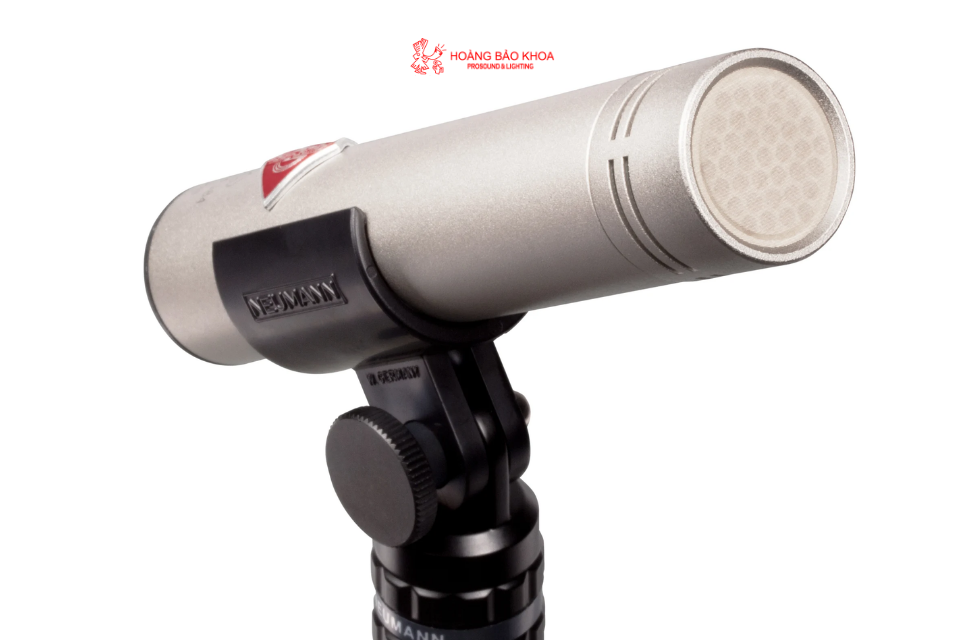
The Neumann KM 184 belongs to the Series 180 family of small-diaphragm condenser Microphones, designed to reproduce sound with clarity, precision and minimal unwanted coloration.
Unlike microphones designed to introduce a pronounced sonic character, the KM 184 prioritizes faithful reproduction of the original sound source.
This is particularly valuable for acoustic guitar, where the recorded tone combines string articulation, soundboard resonance and the player's technique.
As one of the Neumann Instrument Microphones, the KM 184 offers three important advantages:
- A smooth, largely linear frequency response with a gentle treble lift around 9 kHz, adding definition and brilliance.
- Accurate transient reproduction, helping capture fingerpicking, strumming and subtle changes in playing dynamics.
- A frequency-independent cardioid polar pattern with consistent off-axis response, supporting precise Microphone placement.
These characteristics make the KM 184 suitable for capturing both the articulation of individual notes and the natural resonance of an acoustic guitar.
How Does the Cardioid Polar Pattern Affect Recording?
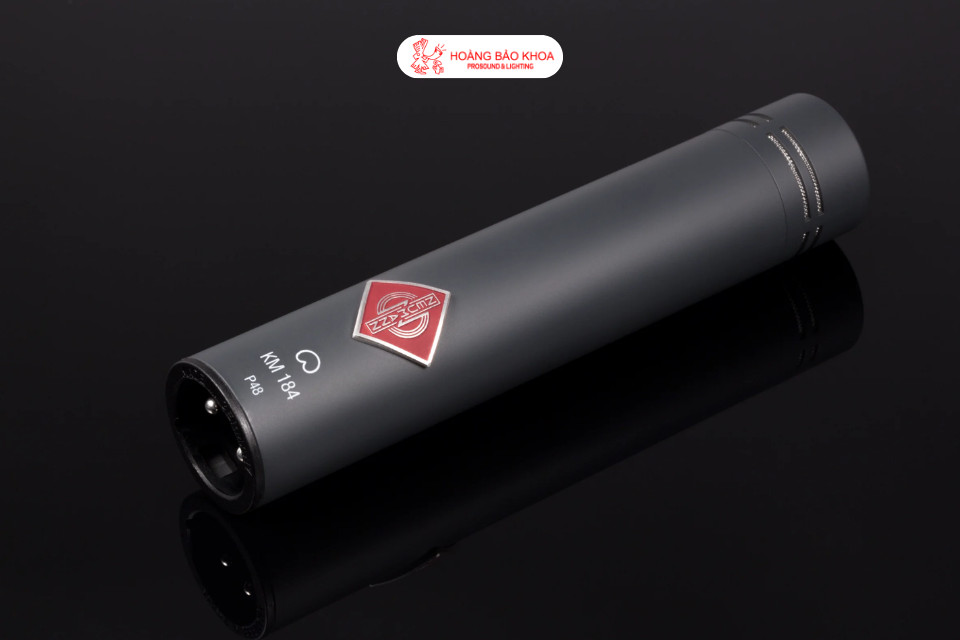 The KM 184 features a fixed cardioid polar pattern that emphasizes sound arriving from the front while reducing sensitivity to sound from the rear.
An important characteristic is its controlled off-axis response, which helps maintain tonal consistency when sound reaches the microphone from different angles.
In acoustic guitar recording, this offers two practical advantages:
- Engineers can adjust Microphone positioning to balance string detail and body resonance.
- Directional pickup helps reduce unwanted sound from other instruments or surrounding sources.
However, a cardioid microphone does not completely eliminate room reflections. Recording quality still depends on Microphone placement, the instrument and the acoustic environment.
How to Position the Neumann KM 184 for Acoustic Guitar
Microphone placement significantly influences the final recording. With the KM 184, three starting positions are particularly useful.
Positioning Near the 12th Fret
One common approach is to position the microphone approximately 20–30 cm from the guitar, aimed toward the 12th fret or the neck-body junction.
This position often provides a balanced combination of string articulation, note definition and body resonance.
Small changes in angle can produce noticeable tonal differences, allowing the engineer to adjust the balance without relying entirely on EQ.
Positioning Toward the Bridge
Moving the KM 184 toward the bridge can emphasize different aspects of the guitar's soundboard resonance.
Depending on the instrument and microphone angle, this position may change the balance between body tone, pick attack and string detail.
Listening carefully and adjusting the distance is essential to avoid an overly bright or unbalanced result.
Avoiding Direct Soundhole Placement
Pointing a microphone directly into the soundhole at close range can emphasize low-frequency resonance, resulting in excessive bass or a boomy recording.
A more balanced approach is to begin near the 12th fret and gradually move toward the body when additional fullness is needed.
The suggested 20–30 cm distance is a practical starting point rather than a fixed requirement for every instrument.
Can Two Neumann KM 184 microphones Record Stereo Guitar?
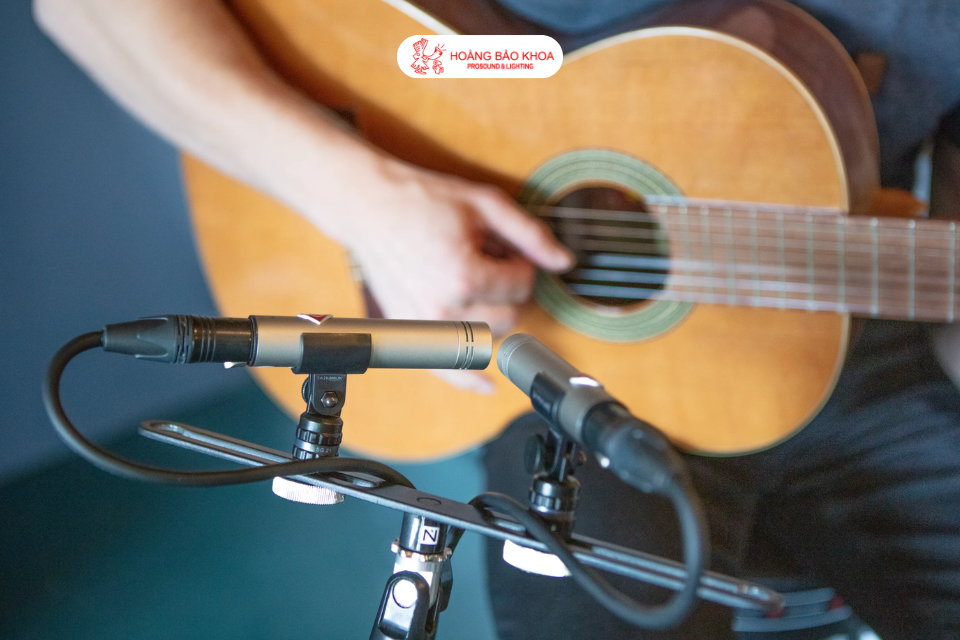
Yes. A pair of KM 184 Microphones can be used for stereo techniques such as XY and spaced pair recording.
In an XY configuration, the two microphone capsules are positioned close together and angled in different directions. This arrangement helps minimize timing differences between channels.
A spaced pair places the microphones farther apart, potentially using one near the neck and another toward the guitar body.
This can produce a wider stereo image, although phase relationships and mono compatibility require attention.
The KM 184's consistent off-axis response makes it particularly useful for accurate stereo imaging and acoustic instrument recording.
Neumann KM 184 Technical Specifications
| Specification |
Value |
| Microphone type |
Small-diaphragm condenser |
| Polar pattern |
Fixed cardioid |
| Frequency range |
20 Hz – 20 kHz |
| Sensitivity |
15 mV/Pa |
| Self-noise |
13 dB-A |
| Maximum SPL |
138 dB SPL at 0.5% THD |
| Dynamic range |
125 dB |
| Rated output impedance |
50 & OMEGA; |
| Power requirement |
48V phantom power ± 4V |
| Connector |
3-pin XLR |
| Dimensions |
Ø22 × 107 mm |
| Weight |
Approximately 80 g |
The KM 184 combines low self-noise with high SPL handling, allowing it to capture both delicate fingerstyle performances and more forceful strumming.
When Should You Choose the Neumann KM 184?
The KM 184 is an excellent option when the recording objective is to preserve the acoustic guitar's natural tonal characteristics while maintaining clarity and articulation.
It is suitable for fingerstyle performances, strummed acoustic guitar, solo instrumental recordings and stereo microphone configurations.
However, its gentle high-frequency lift may emphasize string noise or pick attack on instruments that already sound particularly bright.
For this reason, careful microphone positioning remains important.
Overall, the KM 184 is a strong choice for professional acoustic guitar recording, particularly when accuracy, transient detail and flexible placement are priorities.
Explore Neumann Recording Equipment at Hoang Bao Khoa
Musicians and recording engineers interested in Neumann Microphones For Acoustic Instruments can explore Neumann recording solutions through Neumann Studio at hoang bao khoa.
The Neumann Studio experience space allows visitors to listen to and explore Neumann equipment in a practical studio environment. Please contact Hoang Bao Khoa to confirm product availability before arranging a visit.