Three-way studio monitors do more than simply add another driver. They provide greater control over the midrange, where much of the critical information in a mix is located. Dividing the low, mid, and high frequencies among dedicated drivers improves accuracy, reduces distortion, and enhances separation during monitoring.
What Are Three-Way Studio Monitors?
Three-way studio monitors divide the frequency spectrum into three regions, with a dedicated driver for each:
- Woofer handles the low frequencies
- Midrange driver reproduces the mid frequencies
- Tweeter handles the high frequencies
This division allows each driver to operate more efficiently, increasing accuracy and reducing distortion compared with conventional studio monitors.
This principle is also applied in three-way Neumann Studio Monitors such as the KH 310.
Why Is the Midrange Important?
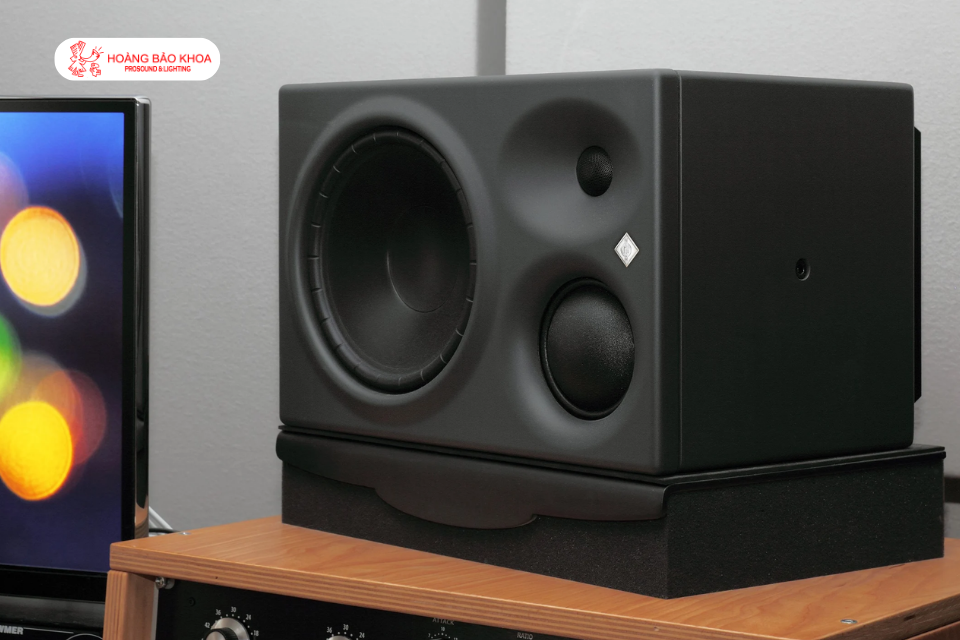
The midrange contains a significant amount of critical musical information, including vocals, lead instruments, and the core tonal balance of a mix.
Accurate midrange reproduction therefore plays an important role in making mixing decisions.
A dedicated midrange driver, such as the one used in the Neumann KH 310, provides greater detail and resolution, better separation between individual elements, and improved accuracy when mixing.
Neumann KH 310 and Its Three-Way Design
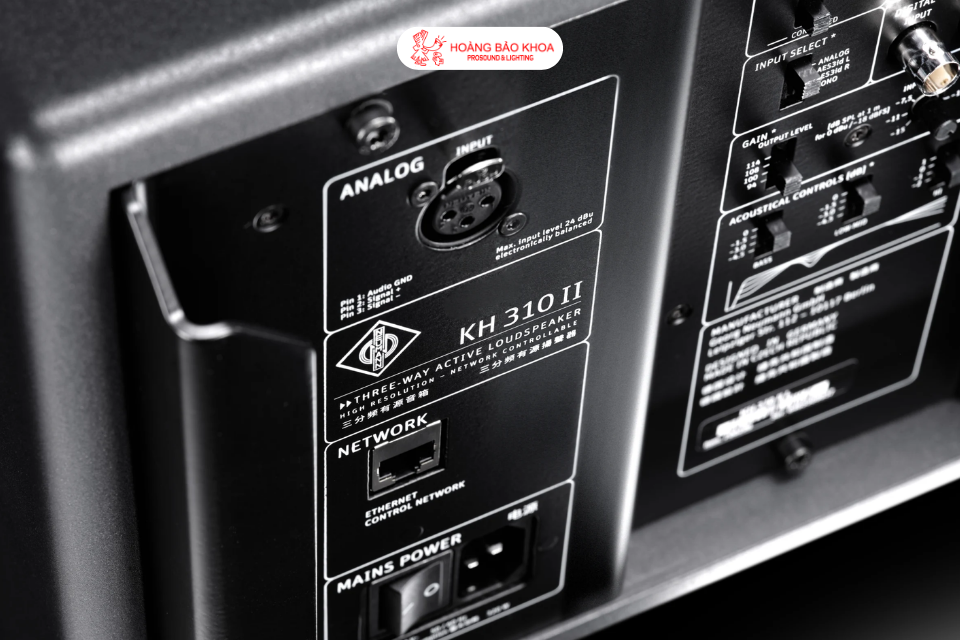
The Neumann KH 310 is a reference monitor featuring a three-way, tri-amplified design. This configuration provides fast and accurate transient response.
The 8-inch woofer handles the low frequencies, delivering tight, controlled bass with extension down to 34 Hz.
At the heart of the system is a highly sensitive 3-inch midrange dome. This dedicated driver provides high resolution and accuracy in the midrange with very low distortion.
The 1-inch alloy tweeter is combined with a Neumann-developed waveguide to create a wide and accurate sweet spot. The waveguide also helps reduce reflections from surfaces near the monitor, such as a desk or ceiling.
The combination of these three drivers produces a natural, high-resolution sound image with consistent imaging.
How Is the KH 310 Designed for Studio Environments?
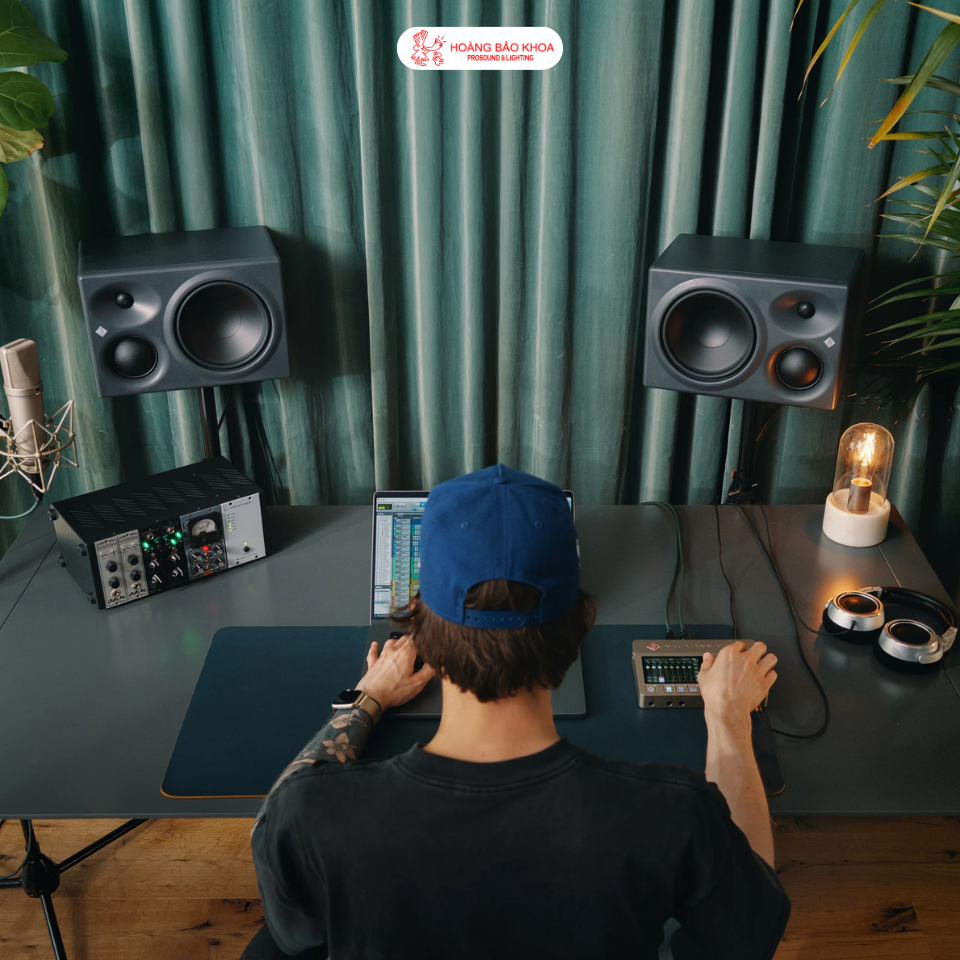
The KH 310 is designed for horizontal placement. This orientation ensures that the waveguide operates as intended and maintains consistent imaging.
Inside the monitor is a Class AB amplification system. Each driver is protected by an independent limiter. When a limiter is activated, the Neumann logo turns red to indicate that the system has reached its limit.
To adapt to the room, the KH 310 provides acoustic controls for bass, low-mid, and treble.
Input and output level controls also allow users to fine-tune the system for the listening environment.
These features make the KH 310 a clear example of how Neumann Professional Studio Monitors with a three-way design are engineered for accurate monitoring.
When Should You Use Three-Way Studio Monitors?
Not every monitoring system requires three-way studio monitors.
According to Neumann, the benefits of this type of system become more apparent when working in medium to large rooms, when higher SPL and greater headroom are required, when projects demand high accuracy, or when detailed control of the midrange is important.
For compact setups, two-way monitors remain an effective solution.
When the work requires critical listening, a three-way system provides advantages in separation and midrange accuracy.
Expanding the KH 310 System with a Subwoofer
The KH 310 can be combined with Neumann DSP subwoofers such as the KH 750 or KH 805 II to extend the capabilities of the monitoring system.
Adding Neumann Studio Subwoofers extends low-frequency reproduction down to 16 Hz while providing additional SPL headroom and improving the balance of the overall system.
When MA 1 Automatic Monitor Alignment is used, the entire system can be precisely aligned to the room and listening position.
As a result, a Neumann Studio Monitor Speakers system can be configured more appropriately for the actual monitoring environment.
What Does the KH 310 Bring to the Monitoring Process?
The key advantage of a three-way design lies in dividing the frequency spectrum among three dedicated drivers. In particular, the dedicated midrange driver helps reproduce one of the most critical areas of a mix with greater accuracy.
With the KH 310, its three-way tri-amplified design combines bass extension down to 34 Hz, a dedicated midrange dome, and a tweeter with waveguide to produce a natural, high-resolution sound image, a wide sweet spot, and consistent imaging.
Whether used for recording, mixing, or mastering, the KH 310 is designed by Neumann to deliver natural, high-resolution reference sound.
Experience the Neumann System at Hoang Bao Khoa
In addition to learning about the characteristics and operating principles of a monitoring system, users can experience Neumann products directly in a studio environment at hoang bao khoa.
Neumann Studio is a space for experiencing Neumann products under real studio conditions, allowing users to listen to the system directly and explore the Neumann Studio Equipment that best suits their needs.
Source: Neumann Homestudio Academy - Monitor Monday EP 3: What are Three-Way Studio Monitors and When Do You Need One?