Full Range Monitoring enables accurate reproduction of the entire frequency spectrum, from deep sub-bass to high-frequency detail. By combining high-performance studio monitors with a subwoofer, the system can provide full control across the frequency range without gaps or exaggeration, delivering a more consistent and reliable monitoring environment.
What Is Full Range Monitoring?
A Full Range Monitoring system is designed to accurately reproduce the entire frequency spectrum, from the lowest sub-bass frequencies to high-frequency detail.
According to Neumann, this system is built by combining high-performance Neumann Studio Monitors with a subwoofer to extend low-frequency reproduction.
As a result, the system can reveal everything happening in the mix without leaving gaps or exaggerating a particular frequency range.
In Monitor Monday EP 4, Neumann uses the KH 420 in combination with the KH 870 II to demonstrate how to build a full-range monitoring system.
How Do the KH 420 and KH 870 II Create a Full Range System?
The KH 420 combined with the KH 870 II creates a monitoring system capable of covering the entire frequency range.
Thanks to the DSP capabilities of the KH 870 II, the entire system can be aligned using Neumann MA 1 Automatic Monitor Alignment.
After alignment, the system can achieve a flat frequency response down to 16 Hz, with phase linearity adjusted to suit the room. The result is a consistent and reliable monitoring environment.
Neumann KH 420 in the Monitoring System
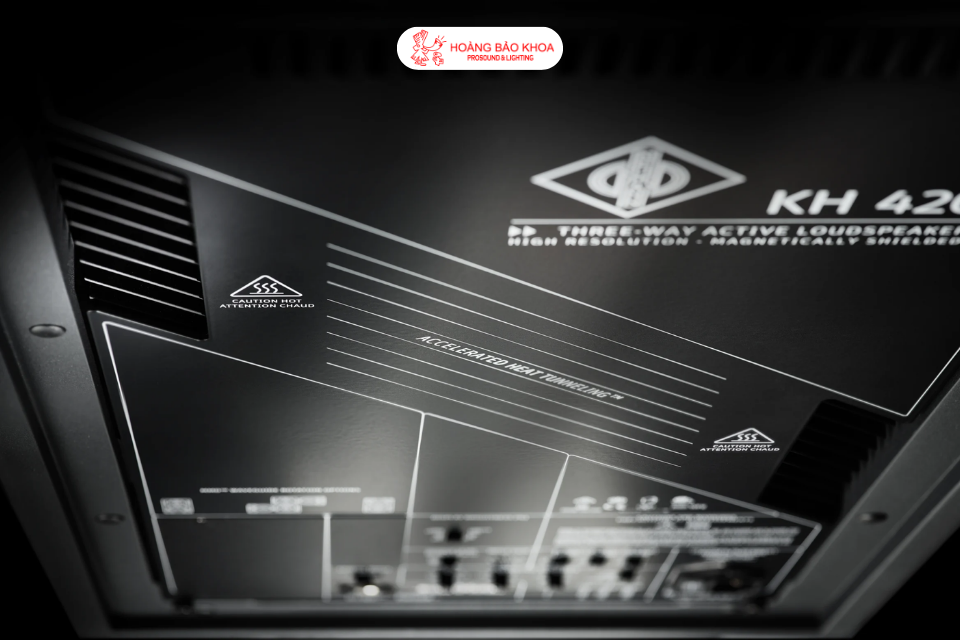
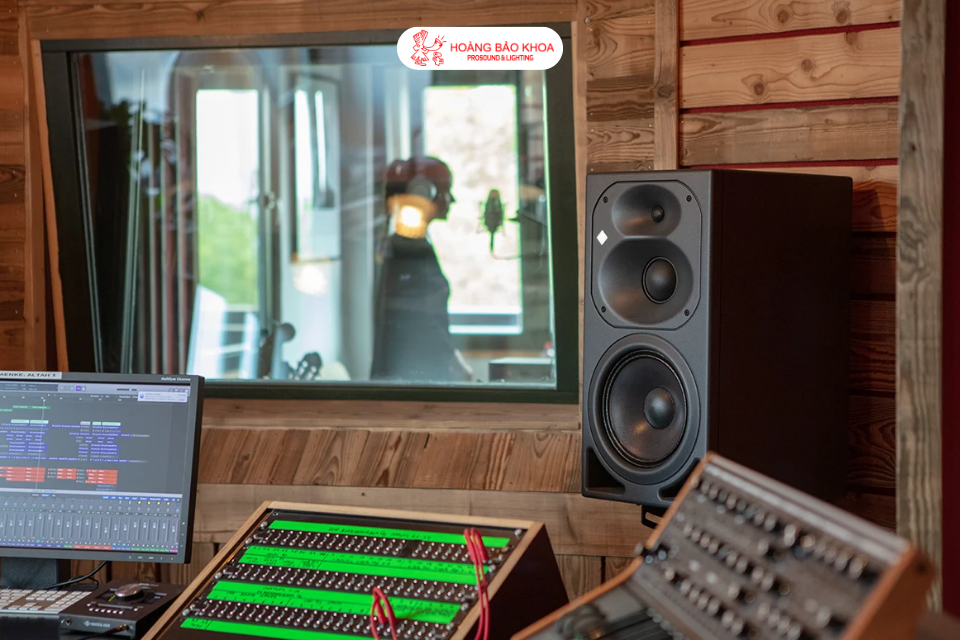
The Neumann KH 420 is a three-way, tri-amplified studio monitor designed for midfield and main monitoring. The optimal listening distance is between 1.5 and 3 meters.
The KH 420’s low-frequency driver reproduces bass down to 25 Hz.
The 3-inch midrange dome handles the midrange, providing high resolution and accuracy in this critical frequency region. A 1-inch alloy tweeter adds clarity and detail at high frequencies.
The KH 420’s waveguide provides wide and consistent horizontal dispersion, giving the listener greater flexibility in positioning. At the same time, narrower vertical dispersion helps reduce reflections from the desk, console, or ceiling.
The midrange and tweeter assembly can also be rotated, allowing the Neumann KH 420 Studio Monitor to be used in both horizontal and vertical orientations.
Adjusting the KH 420 to Suit the Room
On the rear panel, the KH 420 provides acoustic controls for bass, midrange, and treble.
The monitor also features an integrated parametric equalizer for addressing room modes. This allows the KH 420 to be adjusted more precisely for different acoustic environments.
This is important because monitoring performance depends not only on the Neumann Studio Monitor itself, but also on how the system interacts with the room in which it is used.
KH 870 II Extends the System into the Low Frequencies
When the KH 420 is combined with the KH 870 II, the subwoofer handles the reproduction of low-frequency content, reducing the load on the main monitors.
This provides two benefits: higher headroom and lower distortion.
The KH 870 II extends the system’s response down to 16 Hz. According to Neumann, the unit not only reproduces bass but also allows the listener to feel this frequency range.
The KH 870 II uses two 10-inch long-throw woofers operating in a rigid bass-reflex enclosure with a protective metal grille. This design helps maintain controlled performance and low distortion even at high SPL levels.
As a result, the Neumann Subwoofer does not simply add more bass, but provides the low-frequency extension for the entire system.
KH 870 II for Stereo and Immersive Systems
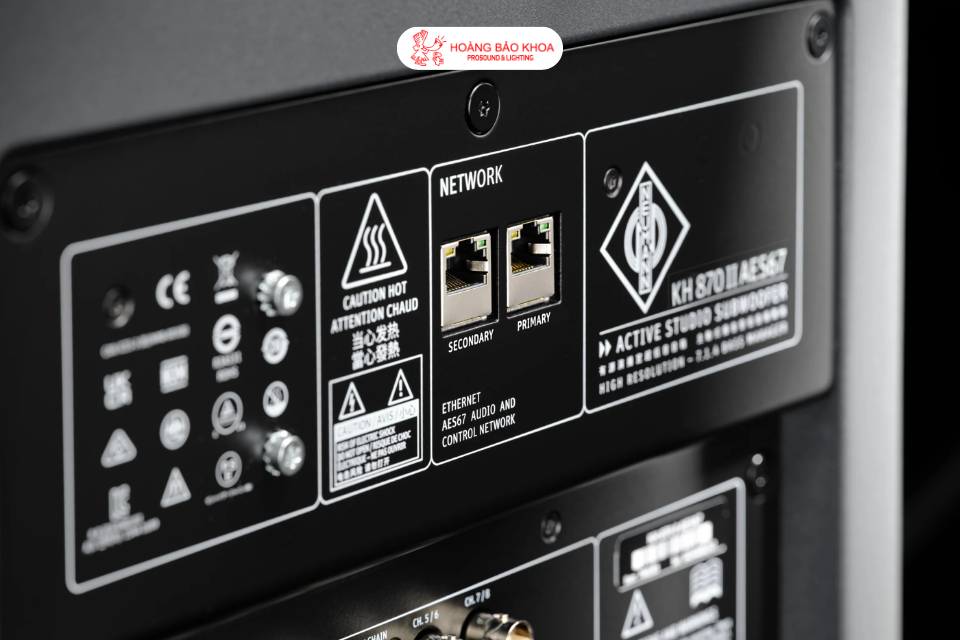
The KH 870 II is DSP-controlled and supports automatic calibration with MA 1.
The subwoofer also features bass management for up to 11 loudspeakers, allowing it to be used in immersive systems up to 7.1.4.
According to Neumann, the system can support workflows involving music mixing, film, and immersive audio.
When Is Full Range Monitoring Suitable?
According to Neumann, a Full Range Monitoring system is suitable for midfield environments or larger rooms where deep low-end control or high accuracy across the entire frequency spectrum is required.
The system is also suitable for workflows involving film, post-production, and immersive audio.
For compact setups, simpler monitoring systems can still meet the requirements effectively. Full Range Monitoring becomes suitable when users need control over the entire frequency spectrum, from deep sub-bass to high-frequency detail.
Experience Neumann Monitoring Systems at Hoang Bao Khoa
Understanding the specifications helps users understand the capabilities of each device, while hands-on experience makes it possible to evaluate the system in a real studio environment.
At hoang bao khoa, Neumann Studio is a space where customers can directly experience Neumann products. This allows users to listen to and explore how Neumann Studio Equipment operates within a real studio system.
Source: Neumann Homestudio Academy - Monitor Monday EP 4: How to Set Up Full-Range Studio Monitoring